




Search
Related News
- 00
0000-00
How nutritional security assessment identifies gaps in local diets - 00
0000-00
How to assess a food packaging technology manufacturer’s line integration capability - 00
0000-00
Which industrial equipment cost factors matter most before approval? - 00
0000-00
What determines the price of an automated feeding system? - 00
0000-00
How to qualify a specialty chemicals manufacturer for food-contact formulations
Agri-Tech Solutions That Cut Water Waste Without Slowing Yield




For project managers and engineering leads, Agri-Tech Solutions are no longer optional—they are central to reducing water waste while protecting yield, timelines, and investment returns. From precision irrigation to sensor-driven field control, today’s innovations help teams balance sustainability targets with operational performance. This article explores practical approaches, emerging technologies, and strategic insights shaping smarter water use across modern agriculture.
Why Water Efficiency Has Moved to the Center of Agricultural Project Decisions
Across open-field farming, protected cultivation, and integrated agri-food operations, water management has shifted from a utility concern to a board-level project variable. The change is visible in planning cycles, where irrigation design is now reviewed alongside energy use, labor automation, and crop quality targets. In many regions, project teams are no longer asking whether to deploy Agri-Tech Solutions, but which combination can cut avoidable water loss within a 12- to 36-month investment horizon.
Several signals explain this shift. Water pricing volatility is affecting operating models, weather variability is shortening the margin for irrigation mistakes, and buyers across food supply chains increasingly expect traceable resource use. For engineering leads, this means irrigation is no longer a standalone system. It is now part of a broader digital control layer linked to pumps, valves, fertigation, climate response, and field-level data collection.
The practical implication is clear: projects that rely on fixed irrigation schedules often waste water in the 10% to 30% range under variable weather and soil conditions, while projects using monitored and adjusted irrigation windows typically improve control over both water and crop stress. Yield protection matters because the market no longer rewards efficiency claims that come at the cost of throughput, grading standards, or harvest consistency.
What Has Changed in the Last Few Planning Cycles
The strongest trend is not a single invention but the convergence of tools. Soil moisture probes, weather feeds, remote valve control, variable-rate irrigation, and data dashboards are being deployed together rather than in isolation. That integration allows project teams to move from reaction to prediction. Instead of irrigating after stress appears, they can model demand in hourly or daily intervals and intervene before yield risk becomes visible.
A second change is procurement behavior. Buyers are giving more weight to interoperability, serviceability, and deployment speed. A technically advanced system that requires 9 months of customization may lose to a modular setup that goes live in 8 to 12 weeks and scales field by field. This is especially relevant for mixed operations where orchards, row crops, greenhouse units, and post-harvest water systems may need different control logic.
A third change is accountability. Water use is increasingly reviewed not only by farm operators but also by investors, food brands, and internal sustainability teams. As a result, Agri-Tech Solutions are being evaluated on measurable outputs such as irrigation uniformity, leak reduction, water-per-ton performance, and response time to abnormal flow events rather than on equipment specifications alone.
The following table highlights how water-efficiency priorities are evolving in project selection and execution.
For project managers, the key lesson is that water-saving initiatives are no longer judged by equipment installation alone. They are judged by whether the system creates a controllable operating environment, reduces decision lag, and supports agronomic outcomes across at least one full crop cycle.
The Main Drivers Behind Demand for Smarter Agri-Tech Solutions
The demand for Agri-Tech Solutions that reduce water waste without slowing yield is being shaped by a mix of environmental pressure, economics, and systems engineering reality. Water scarcity remains the headline factor, but the deeper issue is unpredictability. When rainfall distribution changes week by week, the value of responsive control systems increases because static irrigation assumptions break down more often.
Energy costs also matter. Every unnecessary cubic meter pumped adds pressure to power use, maintenance intervals, and peak-load planning. In sites with long pipe runs, elevation changes, or multi-zone distribution, poor irrigation control can create hidden costs that exceed the value of the wasted water itself. This is why engineering teams increasingly evaluate water and energy together instead of as separate utility lines.
At the same time, crop quality requirements are becoming stricter. Uniformity, fruit sizing, nutrient balance, and harvest timing are all affected by irrigation precision. A project that saves water but increases stress variation across zones can create grading losses or rework in downstream handling. As a result, the strongest market demand is for systems that reduce waste while maintaining acceptable moisture ranges, often within narrow thresholds tied to crop stage.
Where the Strongest Technical Push Is Coming From
In practical terms, innovation is moving in four directions at once: better sensing, better actuation, better analytics, and better system integration. Teams that adopt only one layer often see partial gains. The larger performance shift usually appears when at least three layers are connected, such as moisture sensing, automated valve response, and dashboard-based exception alerts.
Key driver categories project teams should track
- Climate variability: More frequent swings in temperature, wind, and rainfall increase the value of dynamic irrigation adjustment in 24-hour to 72-hour windows.
- Input efficiency pressure: Fertigation and water delivery are increasingly managed together to avoid nutrient dilution, runoff, and repeated field passes.
- Labor constraints: Systems that reduce manual valve checks, field scouting frequency, and emergency maintenance calls improve project reliability during peak weeks.
- Data visibility requirements: Management teams want weekly, monthly, and seasonal dashboards that show water use against area, crop stage, and target output.
This combination of drivers explains why market attention is shifting from standalone irrigation hardware to decision-support ecosystems. The most useful Agri-Tech Solutions now help teams identify not only when to irrigate, but where underperformance, pressure loss, or uneven application is likely to appear before it affects yield.
For intelligence-led organizations such as GALM, this trend matters beyond engineering. It connects upstream resource control to downstream food quality, sustainability claims, and long-term resilience planning. In other words, smarter water use is becoming part of a broader farm-to-table operational strategy rather than a narrow field intervention.
Which Agri-Tech Solutions Are Gaining Ground and Why They Matter
Not every technology category delivers the same value under the same conditions. Project leaders need to compare options based on field variability, crop value, infrastructure maturity, and deployment complexity. In many cases, the best-performing water strategy is not the most advanced on paper, but the one that operators can maintain, trust, and use consistently through a full season.
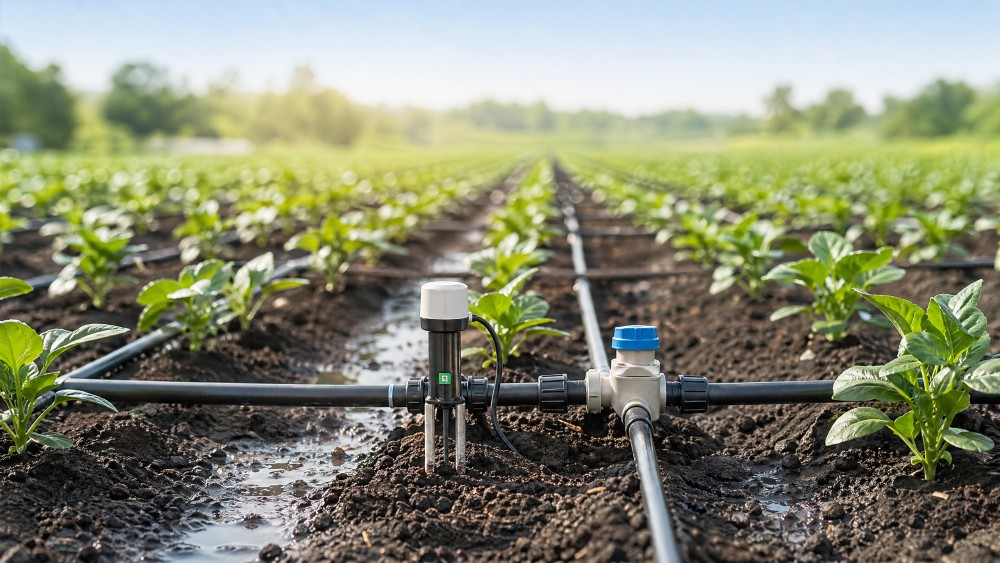
Precision irrigation systems remain the anchor solution. Drip and micro-irrigation setups, when paired with pressure monitoring and zoning logic, offer strong control over application rates. Their advantage grows in crops where root-zone accuracy matters and where overspray or runoff creates measurable loss. However, benefits depend on filtration quality, emitter maintenance, and hydraulic design discipline.
Sensor-based control platforms are also gaining ground because they shorten the feedback loop. Moisture, salinity, pressure, and flow sensors can reveal whether water is reaching the right zone at the right time. In projects above 20 to 50 hectares, even a small drop in leak detection time can materially affect seasonal water use and labor allocation.
Comparison of common solution paths
The table below compares several Agri-Tech Solutions that are often considered by project managers balancing water efficiency with yield continuity.
A useful pattern is emerging: the solutions gaining the most traction are those that produce visible operator benefits within one season while building longer-term data value over two to three years. This staged value profile makes adoption easier because engineering teams can justify the investment on both immediate efficiency and future optimization grounds.
Another trend worth noting is modular deployment. Rather than rebuilding entire irrigation networks at once, many operations start with one block, one greenhouse cluster, or one pressure-critical area. This phased model lowers disruption and gives project teams real performance data before scaling to the next 25% to 40% of the site.
How These Changes Affect Project Managers, Engineering Leads, and Supply-Chain Stakeholders
The move toward smarter water control affects different decision-makers in different ways. Project managers are being asked to prove capital efficiency, delivery discipline, and operational readiness. Engineering leads must ensure that the selected Agri-Tech Solutions can function under real site conditions, including power quality, communication reliability, filtration limits, and maintenance capacity.
Procurement teams are also under pressure to move beyond unit price comparisons. A lower-cost component may appear attractive but create higher service costs if spare parts are inconsistent or if software support is weak. In water-critical projects, downtime measured in 24 to 48 hours during sensitive crop stages can have a larger business impact than the original purchase savings.
Downstream stakeholders in food processing, nutrition, and quality management are increasingly interested as well. Stable irrigation contributes to more predictable crop characteristics, which supports better processing performance, lower rejection risk, and stronger consistency from farm to table. That broader value chain perspective is central to GALM’s strategic view of sustainable agriculture and life-quality enhancement.
Impact by role and business function
The following table shows where the strongest operational impact is being felt.
For managers planning multi-site projects, one of the clearest lessons is that technical success depends on governance as much as equipment. Teams should define who owns thresholds, who responds to alerts, how often data is reviewed, and what actions are mandatory when readings move outside acceptable bands. Without these decisions, even strong Agri-Tech Solutions can underdeliver.
What to Watch Next: Signals That Will Shape the Next Phase of Adoption
The next stage of market change will likely center on integration depth, not just device counts. Many operations already have pieces of digital irrigation in place. The challenge now is combining them into coherent workflows that support daily decisions, seasonal reviews, and long-term asset planning. Expect more focus on compatibility between sensors, control units, mobile interfaces, and farm management systems over the next 18 to 24 months.
Another signal is the rise of decision layers built on analytics rather than raw data alone. Users increasingly want alerts that rank urgency, compare zones, and suggest corrective action. This matters for engineering teams because the value of a system depends not just on what it measures, but on how quickly the team can interpret and act on those measurements during narrow irrigation windows.
Project teams should also watch standardization trends. As sustainability reporting becomes more operationally embedded, water-use records may need to be more structured, auditable, and linked to production context. While specific reporting frameworks differ by market, the general direction is toward clearer documentation of inputs, responses, and outcomes across the growing cycle.
A practical decision framework for near-term planning
- Map current water loss points by zone, pressure behavior, and manual intervention frequency over at least one 30-day operating period.
- Prioritize one or two measurable goals, such as leak response time, irrigation uniformity, or water-per-output reduction, instead of trying to optimize everything at once.
- Select Agri-Tech Solutions that match maintenance capability, connectivity conditions, and operator skill level, not just peak technical specifications.
- Pilot in a representative area and review performance across a meaningful crop stage before full expansion.
- Build a reporting routine with weekly field checks, monthly performance reviews, and one end-of-season adjustment cycle.
This framework helps avoid a common mistake: investing in digital irrigation tools without defining the management process that turns data into water savings and yield protection. The strongest projects are usually those that combine technical fit, operator acceptance, and staged performance review.
Why Strategic Guidance Matters When Choosing Agri-Tech Solutions
As water efficiency becomes a strategic issue across agriculture, food systems, and health-related supply chains, decision-makers need more than product descriptions. They need market context, implementation judgment, and a clear view of how technology choices affect operations from production through quality outcomes. That is where a cross-sector intelligence perspective becomes valuable.
GALM supports this kind of decision-making by connecting sustainable agriculture trends with commercial insight and life-quality priorities. For project managers and engineering leads, that means a stronger basis for evaluating solution direction, adoption timing, and risk exposure. It also means understanding how water-smart Agri-Tech Solutions fit into wider changes involving AI, biotech, traceability, and global food expectations.
If your team is assessing upgrades, expansion plans, or a phased rollout strategy, it is worth reviewing several points before moving forward: expected water-use baseline, crop sensitivity by stage, system integration needs, operator workload, likely delivery window, and the level of reporting required by management or downstream partners.
Why choose us
GALM brings together strategic intelligence, technical interpretation, and value-chain awareness for organizations navigating change across agriculture, food, and life sectors. We do not treat Agri-Tech Solutions as isolated equipment decisions. We examine how water-saving technologies influence project feasibility, supply continuity, sustainability targets, and future competitiveness.
Contact us if you need support with parameter confirmation, solution selection, deployment-stage judgment, expected delivery cycles, integration planning, reporting requirements, or custom intelligence on market direction. Whether you are comparing precision irrigation paths, planning sensor deployment, or aligning engineering upgrades with broader business strategy, our team can help clarify the next practical step.
Related News
- Which agricultural technology in Europe can cut irrigation water use?Sep 08, 2026Agricultural technology Europe: discover how soil sensors, precision drip irrigation, automation and AI help farms cut water use while protecting yields.
- How Can Irrigation Systems Meet Local Water-Use Regulations?Sep 04, 2026Learn how to ensure irrigation systems meet local water usage regulations with practical tips on permits, metering, scheduling, runoff control, and compliance records.
- When do remote irrigation systems pay off for small farms?Aug 29, 2026Remote irrigation systems can help small farms cut labor, water, and energy costs while protecting crop quality. Discover the ROI factors that determine payback.
- Drip Irrigation System Cost Breakdown: What Changes Total Project SpendJul 13, 2026Drip irrigation system cost explained: learn what drives total project spend, hidden expenses, and how to compare quotes for better long-term value.