




Search
Related News
- 00
0000-00
Which sources provide reliable sustainable food systems market data? - 00
0000-00
How to prevent hydraulic overheating in construction machinery - 00
0000-00
What ingredient sourcing information reveals supplier reliability - 00
0000-00
What Should a Food Additives Warehouse Include for Safe, Traceable Storage? - 00
0000-00
Control System Design Priorities for Ingredient Manufacturers Handling Allergen Risks
Can smarter machinery reduce irrigation waste?




Irrigation waste is no longer just a water issue—it affects fuel costs, crop uniformity, labor efficiency, and long-term farm resilience. For operators working in the field every day, smarter machinery can turn irrigation from a routine task into a precise, data-guided decision. By combining sensors, automation, and real-time monitoring, modern agricultural equipment helps deliver the right amount of water at the right time, reducing runoff and overwatering while supporting healthier yields.
For field teams, the question is practical: can smarter machinery reduce irrigation waste without making daily work more complicated? The answer depends on how equipment is selected, calibrated, maintained, and connected to crop conditions.
GALM approaches this topic from a full agri-food intelligence perspective. Efficient irrigation machinery supports sustainable agriculture, lowers operational uncertainty, and helps operators make better decisions across soil, water, energy, and yield management.
Why irrigation waste happens in daily field operations
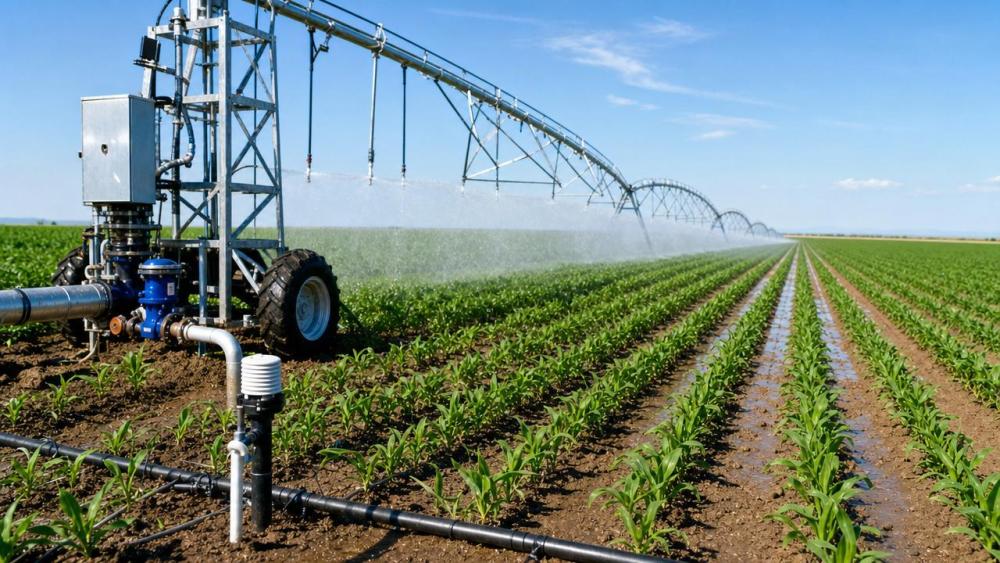
Irrigation waste often begins with small mismatches between field reality and equipment settings. A pump running 20 minutes too long or a nozzle delivering uneven flow can multiply losses across a full season.
Operators usually face 4 recurring causes: inaccurate timing, uneven pressure, poor soil feedback, and delayed response to weather changes. Smarter machinery helps detect these issues before they become expensive habits.
The operator’s view of water loss
From the cab, irrigation waste is rarely visible as one major failure. It appears as wheel-track runoff, ponding at low points, dry corners, inconsistent germination, or fuel use that feels higher than expected.
Conventional machinery may require operators to check pressure gauges manually every 2–4 hours. Connected equipment can shorten that response window to minutes, especially when alerts are sent to a phone or control panel.
Common warning signs
- Runoff appears before the planned irrigation cycle is complete.
- Pressure fluctuates more than 10% between zones or laterals.
- Crop rows show uneven color within 7–14 days after watering.
- Fuel consumption rises while applied water does not improve crop response.
These signs do not always mean the machinery is poor. More often, they show that equipment lacks enough field feedback to guide operation under changing soil and climate conditions.
The role of smarter machinery is not to replace experienced operators. It gives them better timing, cleaner readings, and faster control over pumps, valves, sprinklers, pivots, or drip systems.
How smarter machinery reduces waste at the equipment level
Smart irrigation machinery combines mechanical delivery with digital decision support. The core functions are sensing, automation, variable application, remote monitoring, and maintenance diagnostics.
For many farms, useful upgrades can begin with 3 components: soil moisture sensors, pressure monitoring, and automated valve control. More advanced systems may add weather stations, flow meters, and GPS-based zone maps.
Key technologies and where they help
The following comparison shows how different machinery features address common irrigation losses. Operators can use it to match investment priorities with actual field problems.
The strongest gains usually come when sensors and control hardware work together. A sensor alone informs the operator, but connected machinery can act quickly and consistently.
Automation does not mean ignoring the field
Even advanced machinery needs field judgment. Operators should still verify wetting patterns, inspect emitters, and compare dashboard readings with plant appearance at least once every 7 days during critical stages.
The best systems allow manual override, clear alarm thresholds, and simple zone naming. If operators cannot understand the interface within 30–60 minutes of training, adoption may suffer.
Choosing irrigation machinery for real operating conditions
Procurement decisions should begin with field conditions, not product brochures. Soil type, water source, pump capacity, crop value, labor availability, and maintenance skill all influence which machinery makes sense.
A vegetable grower using drip irrigation may need filter monitoring and fertigation control. A grain producer using center pivots may prioritize nozzle packages, end-gun control, and variable-rate maps.
A 6-point selection checklist
- Confirm water source capacity, including seasonal flow changes and pumping limits.
- Map soil texture zones and infiltration rates before choosing application depth.
- Check whether existing pumps can support target pressure without excessive fuel use.
- Select control hardware that supports at least 3 future expansion zones.
- Review spare parts availability for valves, sensors, filters, and controllers.
- Require operator training, setup documentation, and seasonal calibration guidance.
This checklist helps avoid overbuying features while underestimating practical reliability. Smart machinery should reduce operator workload, not create a second job managing confusing data.
Practical parameter guidance
For many farms, pressure uniformity within a 10% operating band is a useful target. Soil moisture trigger levels should be adjusted by crop stage, rooting depth, and soil water-holding capacity.
Battery-powered field sensors commonly require inspection every 3–6 months. Filters may need cleaning weekly during high sediment periods, while nozzles and emitters should be checked before each major irrigation season.
GALM’s intelligence approach encourages buyers to connect machinery decisions with broader market pressure. Water efficiency, green production standards, and energy cost control are becoming linked purchasing criteria across agri-food supply chains.
Implementation: from manual irrigation to data-guided operation
The transition does not have to happen in one season. A staged plan allows operators to test machinery performance, build confidence, and correct setup problems before expanding across the farm.
A practical implementation usually follows 5 steps: field audit, pilot installation, calibration, operator training, and seasonal review. Each step should produce measurable information, not just installed hardware.
A phased rollout for operators and managers
The table below outlines a typical rollout. Actual timing varies by acreage, crop calendar, irrigation type, and the availability of technicians or in-house maintenance teams.
The key conclusion is simple: installation is only the middle of the project. Smart machinery delivers value when operators trust the readings and know how to respond.
Maintenance habits that protect performance
Maintenance should be scheduled around irrigation intensity. During peak season, operators may inspect filters every 3–7 days, verify pressure weekly, and review sensor anomalies after each major weather event.
Off-season checks should include firmware updates, battery replacement, cable inspection, nozzle wear assessment, and pump efficiency review. These tasks help machinery start the next season with fewer surprises.
Data quality matters
Poor data can lead to poor irrigation decisions. A misplaced sensor, blocked flow meter, or uncalibrated pressure transducer may cause the machinery to apply water at the wrong time.
Operators should label zones clearly, keep installation depth records, and compare dashboard readings with field checks. A 15-minute verification routine can prevent many season-long errors.
Risks, misconceptions, and purchasing advice
Smart irrigation machinery is powerful, but it is not a cure for poor system design. If pumps are undersized, pipes are leaking, or drainage is inadequate, software alone cannot remove waste.
Buyers should also avoid choosing machinery only by screen features. Rugged connectors, weather-resistant enclosures, parts availability, and local service response within 24–72 hours can matter more in daily operation.
Common mistakes to avoid
- Installing sensors only in convenient locations instead of representative soil zones.
- Using one irrigation schedule for fields with different slopes or textures.
- Ignoring pressure losses after adding filters, fertigation units, or longer lines.
- Failing to train night-shift or seasonal operators on alarms and overrides.
- Expanding too quickly before the pilot zone has completed at least 1 crop cycle.
These mistakes are common because irrigation is often treated as a background task. In reality, water delivery affects fertilizer movement, root oxygen, disease pressure, and harvest consistency.
What operators should ask suppliers
Before buying, operators should ask how the machinery behaves when signal is lost, power drops, or a valve fails. Safe default settings are essential for crops under heat stress.
It is also reasonable to request a demonstration using real field data. A supplier should explain calibration, replacement parts, warranty boundaries, and the typical learning curve for operators.
FAQ for field teams
Does smarter machinery always save water? It can reduce waste when the system is correctly designed, calibrated, and maintained. Poorly placed sensors or ignored alerts can limit results.
Can existing equipment be upgraded? Many farms can retrofit flow meters, controllers, and pressure sensors. Compatibility with pumps, valves, and communication networks should be checked first.
How much training is needed? Basic operation may take 1–2 sessions. Confident troubleshooting usually develops after several irrigation cycles and a complete review of common alarm scenarios.
Turning irrigation intelligence into farm resilience
Smarter machinery can reduce irrigation waste when it gives operators better control over timing, pressure, application depth, and zone response. The value is practical, not theoretical.
For users in the field, the best system is one that simplifies decisions during busy days. Clear alerts, durable components, and reliable calibration are as important as advanced analytics.
For decision makers, irrigation efficiency connects machinery investment with fuel savings, crop uniformity, labor planning, and sustainability expectations across the agri-food value chain.
GALM supports this shift through strategic intelligence, sector trend analysis, and practical insight into precision agriculture machinery. Our perspective helps suppliers, operators, and buyers align equipment choices with long-term food system resilience.
If your operation is evaluating irrigation upgrades, start with field data, operator needs, and a staged implementation plan. Contact GALM to explore tailored insights, compare solution pathways, or learn more about smarter agricultural machinery for sustainable production.
Related News
- How to Choose Between Sprinkler and Drip Irrigation by Crop TypeSep 25, 2026How to choose between sprinkler and drip irrigation for crop type: compare water efficiency, disease risk, soil, and costs to select the best system.
- What Maintenance Does Drip Irrigation Need in Arid Climates?Sep 24, 2026What maintenance schedule does drip irrigation need in arid climates? Discover practical checks for filters, flushing, pressure, salts, and reliable water efficiency.
- Which agricultural technology in Europe can cut irrigation water use?Sep 08, 2026Agricultural technology Europe: discover how soil sensors, precision drip irrigation, automation and AI help farms cut water use while protecting yields.
- How Can Irrigation Systems Meet Local Water-Use Regulations?Sep 04, 2026Learn how to ensure irrigation systems meet local water usage regulations with practical tips on permits, metering, scheduling, runoff control, and compliance records.