




Search
Related News
- 00
0000-00
Market Entry Strategies for Biotech Companies in 2026 - 00
0000-00
Biotech Applications in Dairy Industry: Key Risks - 00
0000-00
How to Evaluate a Food Engineering Manufacturer - 00
0000-00
Nutritional Economic Insights for Smarter Product Pricing - 00
0000-00
Market Entry Strategies for Regulated Food Tech Markets
Agri-Tech Solutions vs Legacy Systems: Where Returns Diverge




For procurement leaders evaluating long-term value, the gap between Agri-Tech Solutions and legacy systems is no longer theoretical. From efficiency gains and traceability to compliance, scalability, and risk control, investment returns increasingly diverge across the agri-food chain. This article explores where modern technologies create measurable purchasing advantages and why outdated infrastructures may be costing far more than expected.
Why Scenario Differences Matter More Than the Technology Label
For buyers in the agri-food and life-related sectors, the real question is not whether Agri-Tech Solutions are “better” in abstract terms. The practical question is where they outperform legacy systems under specific operating conditions. A grain processor, a fresh produce exporter, and a nutrition-focused ingredient supplier may all invest in digital tools, but their return profile can diverge within 12 to 36 months based on throughput, compliance pressure, labor variability, and supplier network complexity.
Legacy systems often remain in place because they appear cheaper at the point of purchase, especially when capital expenditure is reviewed in annual cycles. Yet procurement teams increasingly find that older infrastructure creates hidden costs across 5 to 8 service nodes: manual data entry, delayed maintenance response, fragmented records, inconsistent batch tracking, slower forecasting, and greater audit preparation time. These costs rarely appear in a single invoice, but they directly affect total cost of ownership.
This is especially relevant in a market shaped by sustainability targets, evolving import rules, and greater traceability expectations. In many operating environments, a buyer is no longer comparing one machine to another; they are comparing a disconnected asset base with an integrated decision system. Agri-Tech Solutions typically combine sensors, data capture, monitoring interfaces, and workflow automation, which changes how value is created after installation rather than only at commissioning.
Typical Return Drivers Procurement Teams Should Track
- Reduction in manual intervention across 3 to 7 operational steps, from receiving to quality release.
- Improvement in traceability speed, often shifting recall investigation from several hours to near real-time lookup.
- Lower downtime through predictive maintenance windows scheduled every 30, 60, or 90 days instead of reactive repair.
- Higher compliance readiness for food safety documentation, environmental reporting, and supplier verification.
- Scalability for multi-site sourcing, contract manufacturing, and cross-border fulfillment.
For an intelligence-led organization such as GALM, this scenario-based view is essential because decision quality depends on linking equipment behavior, commercial realities, and downstream consumer requirements. Buyers who frame Agri-Tech Solutions by application scenario instead of product category are usually better positioned to identify where returns truly diverge.
Three Common Scenarios Where Agri-Tech Solutions Separate from Legacy Systems
The strongest procurement decisions often come from mapping investment logic to actual use cases. In agri-food operations, three recurring scenarios reveal where Agri-Tech Solutions create measurable advantage: primary production and input control, post-harvest handling and processing, and traceability-heavy distribution or export. Each scenario has different risk points, cost structures, and decision thresholds.
A legacy setup may still be workable in low-variability environments with stable labor, limited reporting needs, and narrow product lines. However, once an operation faces multiple SKUs, seasonal input shifts, variable quality grades, or retailer-level compliance checks, the economics of delay begin to compound. That is why procurement teams should avoid blanket assumptions and instead compare scenario-specific return paths.
The table below outlines how return divergence usually appears across common application contexts.
The key insight is that returns do not diverge only through yield or labor reduction. They also diverge through resilience. In a volatile supply environment, preserving product integrity, audit readiness, and delivery continuity can be as valuable as improving direct output by 3% to 8%.
Scenario 1: Input-Intensive Farming and Controlled Resource Use
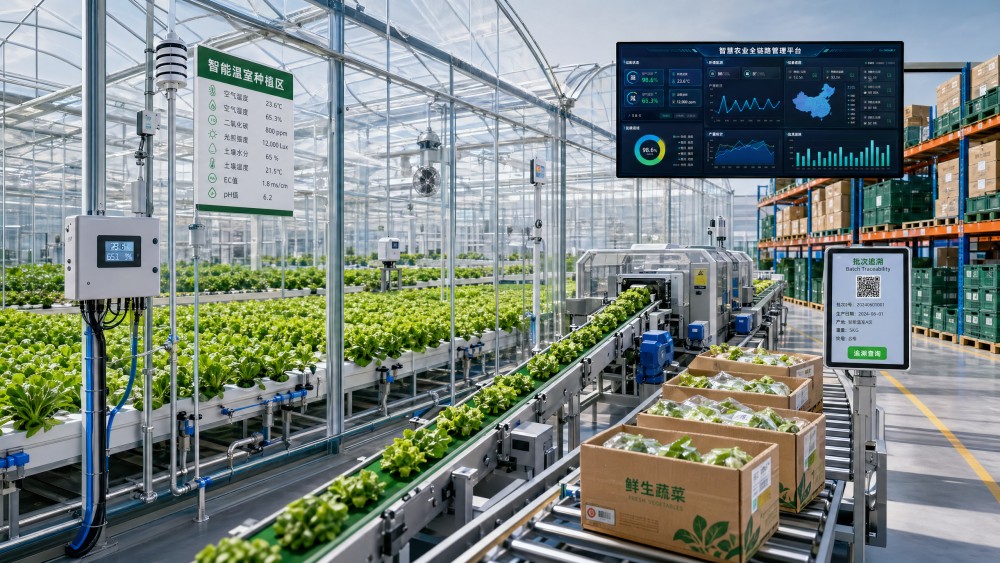
In farms or greenhouse operations where water, fertilizer, crop protection inputs, and labor scheduling are major cost drivers, legacy systems often rely on static calendars or operator judgment. That may work in small, stable plots, but it becomes inefficient when weather variation, soil diversity, and crop-stage needs change week by week. Agri-Tech Solutions add value here through monitored thresholds, variable-rate application, and real-time alerts.
For procurement, the return case should be evaluated against seasonal frequency and intervention precision. If irrigation decisions occur daily during a 90- to 150-day cycle, even modest control improvements can accumulate quickly. Buyers should assess whether the solution reduces overuse, improves consistency, and generates records usable for sustainability reporting or buyer assurance programs.
This scenario is especially relevant when enterprises face resource cost volatility or operate under water-use restrictions. In those settings, the purchasing value of Agri-Tech Solutions is less about headline innovation and more about disciplined input allocation over time.
What to verify before procurement
- Sensor calibration intervals and field durability expectations over 1 to 3 growing cycles.
- Compatibility with existing pumps, valves, controllers, or farm management software.
- Availability of multilingual dashboards, alert thresholds, and operator training modules.
- Data ownership terms and the cost of subscription, updates, or remote diagnostics.
Scenario 2: Post-Harvest Processing with Quality Variability
Post-harvest environments create a different return logic. In sorting houses, milling lines, cold rooms, or ingredient preparation facilities, the issue is rarely one single machine. The issue is flow variability: incoming material changes by grade, moisture, temperature, maturity, or contamination risk. Legacy systems often depend on manual checks and delayed record updates, which can reduce throughput and increase rework.
Agri-Tech Solutions tend to outperform here when the operation handles medium to high daily volumes, serves multiple customers, or faces narrow tolerance bands. Monitoring tools, optical grading, connected storage data, and maintenance alerts allow procurement teams to justify investment through fewer stoppages, better lot separation, and more predictable dispatch. In many facilities, even a 15- to 30-minute reduction in unplanned downtime per shift can affect annual return calculations meaningfully.
This is also the scenario where hidden costs in legacy systems become very visible. When records are spread across paper logs, spreadsheets, and isolated control panels, supervisors lose time reconciling data rather than improving output. Buyers should therefore evaluate not just machine performance, but decision latency across the full process line.
How Procurement Priorities Change by Business Type
Not every buyer measures return in the same way. A vertically integrated producer may prioritize operational stability and resource efficiency. A contract packer may focus on traceability and customer responsiveness. A nutrition-related brand or ingredient importer may put greater weight on documentation, lot integrity, and supplier consistency. The right Agri-Tech Solutions procurement strategy depends on which business risks are most expensive when things go wrong.
This is where many sourcing teams overgeneralize. They compare technologies feature by feature without ranking the business consequence of failure. In reality, the value of automation, analytics, or digital traceability rises sharply when a company handles 20-plus suppliers, runs 2 or more facilities, or supplies channels with frequent audits and specification changes.
The comparison below helps clarify which procurement dimensions matter most by operating model.
A useful procurement principle is to align technology choice with the most expensive operational failure, not the most attractive sales feature. In this way, Agri-Tech Solutions become a risk management tool as much as a productivity investment.
When Legacy Systems May Still Be Acceptable
There are scenarios where full replacement is not immediately necessary. Smaller operations with a limited SKU range, stable local sourcing, and low audit complexity may continue using legacy systems if maintenance is reliable and data gaps are manageable. In these cases, a phased upgrade over 6 to 18 months may be more practical than a full conversion.
However, even in conservative environments, buyers should test whether partial digitization can remove the highest-friction pain points first. Typical starting points include temperature logging, lot coding, service alerts, or supplier record centralization. The return from these narrow deployments can create a clearer roadmap for larger investment decisions later.
The caution is that postponing investment should be a deliberate strategy, not a default habit. If the business is expanding, entering export channels, or tightening quality commitments, the cost of staying with outdated infrastructure may rise faster than expected.
Common Misjudgments That Distort Return Calculations
Procurement teams often underestimate how return divergence develops. The first misjudgment is comparing only acquisition cost. Legacy systems usually look attractive if evaluated by purchase price alone, but agri-food operations are shaped by maintenance hours, reporting labor, failure recovery time, and customer risk exposure. A lower upfront spend can become more expensive over a 24- to 60-month ownership window.
The second misjudgment is assuming all Agri-Tech Solutions require large-scale digital maturity. Many tools can be deployed in modular layers: one line, one storage room, one irrigation zone, or one traceability workflow at a time. This matters for procurement because a staged rollout can reduce integration risk while still producing measurable operating gains in the first season or first two quarters.
The third misjudgment is ignoring downstream value. Faster audit response, stronger customer confidence, cleaner supplier records, and better incident containment may not show up as production efficiency, but they influence retention, qualification, and market access. In sectors linked to nutrition, infant safety, or health-oriented products, that downstream value can be decisive.
A practical screening checklist for buyers
- Identify the 3 highest-cost failure points in your current process, such as spoilage, downtime, delayed batch release, or reporting burden.
- Define the expected operating horizon for the asset or platform, typically 3, 5, or 7 years.
- Separate mandatory compliance functions from optional optimization features.
- Estimate whether a phased deployment can deliver value in one site or one process before network-wide rollout.
- Confirm service coverage, spare parts logic, update cadence, and training support before price negotiation is finalized.
Used properly, this checklist helps buyers avoid both overbuying and underinvesting. It also creates a more disciplined basis for comparing Agri-Tech Solutions from different vendors or system architectures.
How to Build a Better-Fit Agri-Tech Solutions Sourcing Plan
A strong sourcing plan starts with use-case clarity. Procurement should define whether the project is intended to reduce waste, improve traceability, stabilize quality, support compliance, or enable expansion into more demanding channels. While many platforms promise multiple benefits, the buying process becomes more effective when one or two primary return outcomes are set first and measured over a clear period such as 6, 12, or 24 months.
Next, map the current process architecture. Buyers should document which records are still manual, where data is duplicated, which equipment lacks visibility, and how quickly incidents can be isolated by batch, line, or supplier. This often reveals that the strongest case for Agri-Tech Solutions is not total replacement, but integration around the most fragile nodes in the chain.
Finally, evaluate implementation practicality. A technically strong solution can still underperform if operator training is weak, service response is slow, or the reporting interface is difficult to use. Procurement should therefore assess not only hardware or software capability, but also onboarding time, local support pathways, maintenance discipline, and future expansion flexibility.
Recommended evaluation criteria before commitment
- Deployment scope: pilot zone, single line, multi-site, or end-to-end chain visibility.
- Integration pathway: standalone use, API exchange, or dashboard-level aggregation with current systems.
- Operational burden: calibration, cleaning, operator intervention frequency, and update routines.
- Commercial model: capital purchase, subscription layer, service bundle, or hybrid structure.
- Documentation output: audit records, lot histories, alarm logs, maintenance reports, and export-ready files.
Why this approach supports long-term value
When Agri-Tech Solutions are selected through scenario fit rather than trend pressure, buyers gain stronger negotiating leverage and better implementation outcomes. They can ask sharper questions about parameter ranges, service intervals, environmental conditions, and training expectations. They can also prioritize the exact outputs needed by operations, quality teams, and commercial partners.
For organizations navigating the intersection of agriculture, food, health, and life-quality markets, this structured approach is increasingly important. The return gap between modern systems and legacy infrastructure is real, but it becomes visible only when procurement measures value across the full chain from production discipline to customer assurance.
In practical terms, the best investment is rarely the most complex one. It is the one that fits the operating scenario, removes the costliest friction, and creates usable intelligence at the speed the business actually needs.
Why Choose Us for Agri-Food Intelligence and Next-Step Evaluation
GALM supports buyers who need more than broad market commentary. We focus on connecting agri-food machinery, life-science trends, commercial access strategy, and practical decision criteria across the full chain from farm inputs to nutrition-sensitive end uses. That perspective helps procurement teams judge where Agri-Tech Solutions fit, where legacy systems still hold, and where hidden cost exposure is likely to grow.
If you are reviewing Agri-Tech Solutions for sourcing, upgrade planning, or channel expansion, you can contact us to discuss application fit in concrete terms. We can help you structure parameter confirmation, product selection logic, delivery cycle expectations, phased deployment options, supplier comparison points, and documentation priorities linked to your business scenario.
Contact us to explore your specific needs, including operating environment review, procurement scenario mapping, traceability requirements, customization direction, sample support questions, and quotation communication. Whether your focus is precision agriculture, processing modernization, or risk-controlled supply expansion, a scenario-based evaluation will make your next decision more reliable.
Related News
- Precision Farming Sensors: Selection Mistakes to AvoidMay 29, 2026Precision Farming sensors selection guide: avoid costly mistakes in calibration, connectivity, integration, and field fit to improve ROI and smarter farm decisions.
- Best Precision Farming Sensors for Yield TrackingMay 28, 2026Precision Farming sensors for yield tracking: discover the best options for broadacre crops, orchards, greenhouses, and mixed farms to improve decisions, reduce risk, and boost ROI.
- Biotech Applications Improving Crop YieldsMay 23, 2026Biotech Applications in agriculture research are transforming crop yields with smarter genetics, diagnostics, and biological tools. Discover practical insights for stronger, scalable results.
- Best Funding Paths for Ag Innovation in 2026May 23, 2026Agricultural Innovation funding opportunities in 2026: explore grants, blended finance, VC, debt, and partnerships to choose smarter capital paths and scale ag innovation faster.