




Search
Related News
- 00
0000-00
How nutritional security assessment identifies gaps in local diets - 00
0000-00
How to assess a food packaging technology manufacturer’s line integration capability - 00
0000-00
Which industrial equipment cost factors matter most before approval? - 00
0000-00
What determines the price of an automated feeding system? - 00
0000-00
How to qualify a specialty chemicals manufacturer for food-contact formulations
Food Engineering Innovations Reshaping Beverage Filling Line Efficiency




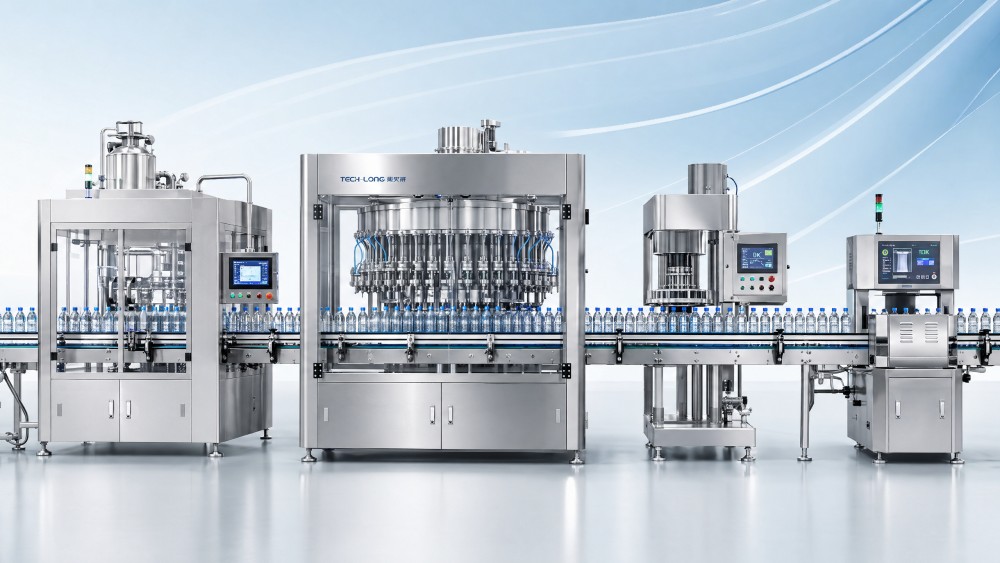
Food Engineering innovations are redefining how beverage filling lines deliver speed, accuracy, and cost control in modern production. For project managers and engineering leaders, understanding these shifts is essential to improving throughput, reducing downtime, and aligning capital investment with long-term operational goals. This article explores the technologies, system strategies, and performance drivers reshaping filling line efficiency across today’s competitive beverage landscape.
Why Beverage Filling Line Efficiency Is Being Reassessed Now
Across beverage manufacturing, the discussion has moved beyond simple speed ratings. A line that once looked competitive at 12,000 to 24,000 bottles per hour may now underperform if changeover takes 90 minutes, cleaning cycles consume excessive water, or reject rates rise during lightweight packaging runs. This is why Food Engineering innovations are increasingly evaluated as system-level efficiency tools rather than isolated machine upgrades.
Several market signals are driving this reassessment. Product portfolios are expanding, with more SKUs, shorter production runs, and more frequent packaging variation. At the same time, labor constraints, utility costs, and sustainability targets are pushing engineering teams to cut unplanned stoppages, compressed air waste, and overfill losses. For project managers, efficiency now means balancing throughput, OEE, energy intensity, sanitation time, and lifecycle serviceability within one decision framework.
Another important shift is the compression of project timelines. Beverage plants that previously accepted 14- to 18-month investment cycles are increasingly looking for phased implementation in 6 to 12 months, especially when brownfield constraints limit civil changes. This puts pressure on line design, digital integration, and commissioning strategy. Food Engineering innovations that support modular deployment and lower-risk retrofits are therefore attracting more attention.
Key trend signals engineering teams are watching
- More frequent changeovers, often 3 to 8 SKU transitions per shift in mixed-format operations.
- Greater line sensitivity due to lightweight PET, thinner cans, and recyclable secondary packaging.
- Higher demand for hygienic flexibility, especially in dairy, functional drinks, juices, and low-acid products.
- Expansion of digital monitoring from basic downtime logs to predictive alerts and real-time performance dashboards.
These signals matter because they change how capital projects are justified. Instead of asking only whether a filler can run faster, project leaders are asking whether a line can sustain target performance over 16 to 20 operating hours per day, across multiple package types, with acceptable product loss and maintenance burden.
The Main Drivers Behind Today’s Food Engineering Innovations
The current wave of Food Engineering innovations is not driven by a single breakthrough. It is the result of pressure from packaging changes, food safety expectations, digital manufacturing practices, and sustainability commitments. These drivers influence both greenfield line design and retrofit decisions in existing facilities.
One major driver is packaging diversity. Beverage producers increasingly run glass, PET, aluminum, and sometimes cartons within the same production network. Even when a single line handles only one format, closure types, bottle geometries, and label materials vary more than they did a decade ago. This forces engineers to prioritize servo-based handling, recipe automation, and improved starwheel or gripper design to protect containers at higher line speeds.
A second driver is sanitation efficiency. In many operations, CIP cycles, sterilization preparation, and validation steps directly affect available production hours. Saving 20 to 40 minutes per cleaning sequence can create meaningful annual capacity gains, especially where the same line supports premium, sensitive, or short-shelf-life beverages. Food Engineering innovations in hygienic valves, flow path design, and automated cleaning verification are therefore becoming central to efficiency discussions.
How the innovation priorities are changing
The table below summarizes how engineering priorities are shifting from traditional equipment-focused thinking to integrated line-performance thinking. This view is especially useful for project managers who need to align technical selection with ROI, risk, and long-term operations.
The shift shown above explains why Food Engineering innovations increasingly combine mechanics, controls, hygienic design, and analytics. In practical terms, the line that creates the strongest value is often not the one with the highest nominal speed, but the one that delivers the most consistent hourly output over a full production week.
Technologies gaining the most attention
- Servo-controlled filling and capping systems for repeatable precision across multiple package formats.
- Vision-based inspection for fill level, closure placement, label orientation, and defect detection in real time.
- Digital twins and simulation tools used during layout planning to reduce commissioning risk.
- Low-loss product pathways designed to reduce waste during startup, shutdown, and flavor transitions.
For engineering leaders, the lesson is clear: efficiency gains increasingly come from integrated design decisions made early in the project lifecycle, not from post-installation troubleshooting alone.
Where Efficiency Gains Are Actually Emerging on Modern Filling Lines
Not every innovation contributes equally to line efficiency. In many beverage plants, the biggest gains are emerging from a few repeatable areas: faster changeover, reduced product giveaway, fewer accumulation-related stoppages, improved sanitation cycles, and better synchronization between upstream and downstream equipment. This is where Food Engineering innovations are reshaping project assumptions.
Take changeover as an example. If a line running 5 to 7 product variants per day reduces average format transition time from 60 minutes to 25 minutes, the recovered capacity can exceed the impact of a moderate speed increase. The same is true for product giveaway. A small reduction in average overfill, repeated across thousands of units per hour, can materially improve margin while also supporting quality consistency.
Another area is line balance. Filling lines rarely lose efficiency only at the filler. Depalletizing, rinsing, capping, labeling, case packing, and palletizing all influence actual output. Advanced controls, buffer management, and data-driven stop analysis help project teams identify whether the true bottleneck occurs at infeed handling, cap delivery, downstream pack-off, or sanitation-related delays.
Typical efficiency levers and their project implications
The following comparison helps engineering project leaders connect specific improvements to measurable outcomes. These ranges are indicative and should be validated against product type, package format, hygiene level, and plant conditions.
The practical takeaway is that Food Engineering innovations should be assessed through total line economics. A project that improves actual shift output by 8% to 12%, while reducing rejects and cleaning losses, may outperform a more expensive speed-focused upgrade that does not address the dominant causes of inefficiency.
What project managers should verify during evaluation
- Measure current losses by category: changeover, micro-stop, sanitation, reject, and starvation/blockage events.
- Model output under realistic SKU mix rather than best-case single-product conditions.
- Check whether utility demand, floor constraints, and operator workload will shift after installation.
- Confirm spare parts logic, training scope, and remote diagnostics support for the first 12 months.
These checks help prevent a common project mistake: buying capacity on paper while leaving the dominant operational constraints untouched.
How These Changes Affect Project Management, Capex Planning, and Risk Control
For project management teams, the rise of Food Engineering innovations changes more than technical specifications. It changes governance. Engineering leaders now need to manage cross-functional decisions involving operations, maintenance, quality, procurement, IT, and sustainability stakeholders. A beverage filling line can no longer be treated as a stand-alone mechanical purchase.
This is especially visible in brownfield projects. Space limitations, utility tie-ins, sanitation zoning, and legacy control architecture often determine whether an innovation creates value or disruption. A filler upgrade that appears straightforward may require conveyor redesign, cap feeder modification, panel integration, operator retraining, and revised CIP validation. In practice, 20% to 30% of project complexity often sits outside the core machine itself.
Capex planning is also becoming more nuanced. Instead of approving one large modernization package, many manufacturers are prioritizing staged upgrades: first digital visibility, then bottleneck removal, then hygienic and changeover enhancement. This phased approach can reduce implementation risk, improve budget control, and generate early performance data to support later investment decisions.
Impact by stakeholder group
Because the benefits and risks are distributed across different teams, it is useful to map where the impact is most visible before finalizing project scope.
This stakeholder view shows why successful implementation depends on early alignment. Food Engineering innovations can deliver strong returns, but only when technical capability, operating discipline, and service readiness are planned together.
Risk signals worth monitoring during project execution
- Performance acceptance criteria are written around rated speed but not SKU mix, sanitation, or reject thresholds.
- Control integration is left too late, delaying FAT, SAT, or data mapping.
- Operator training is compressed into a few days, despite more advanced recipe and diagnostic functions.
- Spare parts and critical consumables are not secured for the first ramp-up quarter.
For engineering project leaders, these risks are manageable, but they should be addressed before procurement finalization rather than after installation.
What to Watch Next: Decision Signals for the Coming Investment Cycle
Looking ahead, the next stage of Food Engineering innovations will likely be judged by adaptability as much as by output. Beverage categories are evolving quickly, and lines that can absorb product variation, regulatory adjustments, and packaging redesign with limited disruption will hold stronger long-term value. Project teams should therefore watch for signals that indicate whether a solution is resilient, not just advanced.
One signal is software maturity. As lines rely more on automation, recipe management, and diagnostics, the quality of the control environment becomes a practical efficiency issue. Another is data usability. Many plants collect line data, but fewer convert it into clear decisions about changeover loss, sanitation optimization, or component wear. The value of innovation increasingly depends on whether plant teams can act on the information without adding analytical burden.
A further signal is service architecture. Fast remote troubleshooting, clear spare parts planning, and realistic upgrade pathways matter more when production schedules are tight and SKU complexity is rising. For many facilities, the strongest efficiency result over a 3- to 5-year horizon comes from solutions that remain maintainable and expandable rather than technically impressive but operationally rigid.
A practical decision checklist
- Define which 3 to 5 loss categories currently limit throughput most severely.
- Compare innovation options by total line impact, not filler specification alone.
- Validate changeover, cleaning, and maintenance assumptions under real operating conditions.
- Request a phased implementation path if utility, floor space, or control integration is constrained.
- Assess whether the solution supports future SKU growth over the next 24 to 36 months.
For decision makers tracking industry direction, the message is not that every beverage plant needs the same upgrade. It is that Food Engineering innovations are changing the criteria for what counts as an efficient filling line. The winning approach is increasingly a balanced one: hygienic, adaptable, data-visible, maintainable, and able to sustain output under real production complexity.
Why Work With GALM for Strategic Evaluation and Next-Step Planning
For project managers and engineering leaders, making sense of Food Engineering innovations requires more than product brochures or isolated performance claims. GALM supports this decision process through a broader farm-to-table and life-cycle intelligence perspective, connecting equipment trends with market direction, food safety priorities, sustainability expectations, and operational feasibility.
Our Strategic Intelligence Center brings together perspectives from industrial economics, food engineering, and consumer behavior to help businesses interpret what today’s changes mean for line investment, capacity planning, and future competitiveness. This is especially valuable when your team needs to compare technical options against commercial risk, long-term flexibility, and compliance-sensitive production needs.
If you are evaluating beverage filling line upgrades, new project scopes, or broader agri-food processing strategy, contact us to discuss the points that matter most: parameter confirmation, solution selection, delivery timeline expectations, customization logic, applicable standards, sample support where relevant, and quotation planning. GALM is here to help you turn industry signals into practical engineering decisions with greater clarity and confidence.
Related News
- How to choose a beverage processing equipment supplier for hygienic productionAug 17, 2026Beverage processing equipment supplier selection starts with hygiene. Learn how to assess sanitary design, CIP performance, compliance, and support for safer, more efficient production.
- How to Choose Automatic Filling Equipment Based on Product Viscosity and OutputAug 10, 2026Automatic filling equipment selection starts with viscosity and output. Learn how to match pumps, nozzles, hygiene needs, and line speed for better accuracy, uptime, and ROI.
- Application Scenario Analysis in Beverage Production: Matching Process Needs to Filling Line DesignAug 02, 2026Application scenario analysis beverage production starts by defining product, package, hygiene, and output realities. Learn how to match process needs to filling line design and avoid costly selection mistakes.
- India Replaces Import Licenses With BIS RegistrationJul 14, 2026India replaces import licenses with BIS registration for beverage filling equipment. Learn how IS 17921:2026 and the 30-day local calibration filing affect compliance, delivery, and market access.