




Search
Related News
- 00
0000-00
Life sciences trends analysis: Which innovations are gaining traction? - 00
0000-00
Stainless Steel Beverage Tanks: A Buyer Checklist for Production Lines - 00
0000-00
How nutritional economic trends are changing supplement pricing - 00
0000-00
How to assess a commercial project solutions supplier before awarding a contract - 00
0000-00
How food policy trends are reshaping sustainable sourcing decisions
Tags
Mayonnaise vs Salad Dressing for Foodservice: Buyer Notes




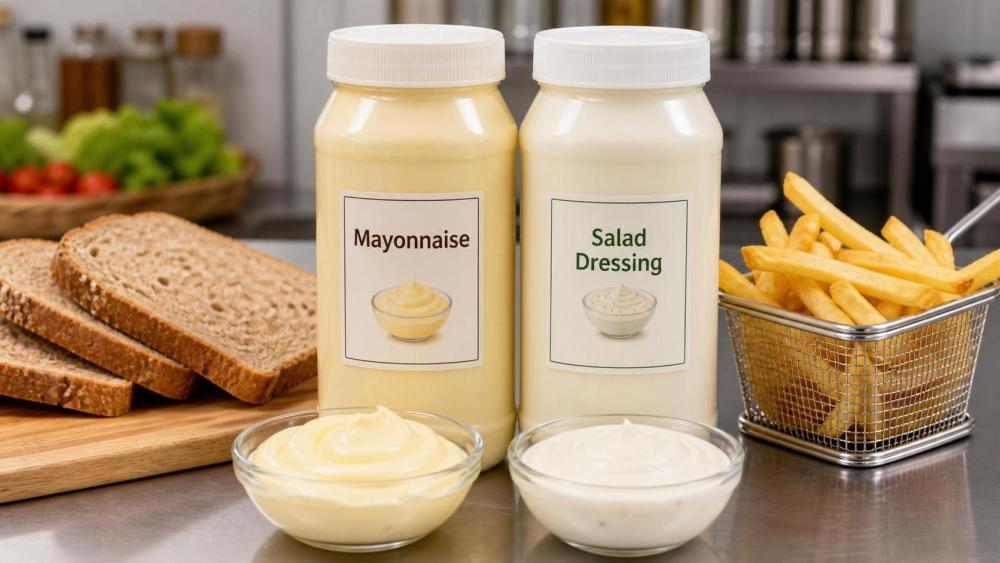
Foodservice buyers often compare mayonnaise and salad dressing as if they are simple flavor choices. In practice, they can behave differently in sandwiches, dips, wraps, salad mixes, and prepared meal systems because their emulsion structure, viscosity, acidity, sweetness, fat level, and seasoning load may not be the same. A sauce that tastes pleasant on a spoon can still fail on a sandwich line if it soaks into bread, separates during holding, or overpowers the filling.
The Spanish query ¿cómo elijo una mayonesa saborizada popular para sándwiches? is a useful example of buyer intent. It is not asking only for a trendy flavor. It is asking how to choose a flavored mayonnaise that works in sandwich production, stays consistent in service, and fits a menu concept. To answer that properly, buyers need a technical comparison between mayonnaise, salad dressing, and flavored sauce systems.
Core Difference: Emulsion Structure
Mayonnaise is generally understood as an oil-in-water emulsion with a creamy body created through the interaction of oil, water phase, acid, emulsifying components, and process control. Salad dressing may also be an emulsion, but its formula can be lighter, sweeter, more acidic, more pourable, or more seasoning-driven depending on the target product. Because formulas vary by market and supplier, buyers should not rely only on category names. They should ask how the product behaves in the intended foodservice application.
Emulsion stability matters because sandwiches and dips experience handling stress. The sauce may be pumped, squeezed, spread, chilled, mixed with herbs, exposed to bread surfaces, or held in small cups. If the emulsion is not suited to the workflow, the buyer may see oiling-out, watery separation, uneven spread, or flavor drift after holding. Technical review should therefore include structure, not only taste.
Viscosity and Spread Behavior
Viscosity affects how the sauce moves. For sandwiches, a flavored mayonnaise should spread without tearing bread, but it should not run into the package. For wraps, it should coat fillings evenly without making the wrap wet. For dips, it should cling to fries, chicken, seafood, or vegetable sticks without becoming gummy. Salad dressing may be more pourable, which can be useful for salads but less suitable for sandwich layers if it migrates quickly.
When evaluating Mayonnaise for sandwich production, buyers should test the product with real bread, fillings, dosing tools, and holding conditions. A technical sample review should include spread force, line dosing, surface coverage, edge leakage, and eating texture. These factors turn a flavor preference into a usable foodservice decision.
Flavor Release in Sandwich Systems
Flavored mayonnaise must deliver enough character to be noticed, but not so much that it hides the main filling. Garlic, chili, herbs, mustard, cheese, smoke, or sweet notes can behave differently once combined with bread, meat, seafood, vegetables, or pickled ingredients. Fat level and acidity influence how quickly flavor is perceived, while salt and spice levels affect aftertaste.
For a buyer asking ¿cómo elijo una mayonesa saborizada popular para sándwiches?, popularity should be tested against menu fit. A flavor that performs well in one region or restaurant concept may not fit another. The technical approach is to define the target sandwich, choose two or three flavor directions, run controlled tasting after normal holding time, and compare the sauce against the full product rather than tasting it alone.
Technical Comparison Table
Acidity, Sweetness and Balance
Acidity helps define freshness and can influence how a sauce cuts through rich fillings. Sweetness can make a sauce more approachable, but excessive sweetness may clash with seafood, chicken, or pickled vegetables. In sandwich production, the sauce is not eaten alone. It interacts with protein, bread, vegetables, cheese, and sometimes heat. Buyers should evaluate balance in the complete sandwich system.
For salad dressing, acidity and sweetness may be central to the product's identity. For mayonnaise, a smoother and fuller mouthfeel may be expected. Neither is automatically better. The correct choice depends on the intended application and customer expectation. This is where technical tasting forms are useful: score acidity, saltiness, sweetness, aroma, mouthfeel, aftertaste, and ingredient compatibility separately.
Stability During Storage and Service
Foodservice sauces may go through chilled storage, opening and closing, dosing, short service periods, and sometimes delivery holding. Each step can stress the product. Buyers should ask for storage guidance, opened-pack recommendations, shelf-life statement, and handling instructions. Internal teams should avoid mixing old and new sauce, using wet utensils, or leaving containers open in uncontrolled preparation areas.
Stability testing should include the final use format. If the sauce is packed into dip cups, check surface appearance after refrigeration. If it is spread onto sandwiches, check bread condition after normal holding. If it is pumped, check restart behavior after pauses. Technical approval should reflect how the product is actually used.
How to Choose a Flavored Mayonnaise for Sandwiches
The question ¿cómo elijo una mayonesa saborizada popular para sándwiches? can be answered with a structured process. First, define the sandwich concept and target customer. Second, choose a base texture that fits spreading and holding. Third, select flavor directions that support the filling. Fourth, test after assembly, not only on a spoon. Fifth, confirm packaging, storage, and dosing before purchase.
A flavored mayonnaise should make the sandwich easier to enjoy and easier to produce. If it requires special handling that the kitchen cannot maintain, the flavor benefit may not justify the operational risk. If it tastes good but leaks into the bread, the finished product may still disappoint. A technical review keeps the buyer focused on both taste and function.
Technical Review Checklist
- Confirm whether the product is intended as mayonnaise, salad dressing, dip base, or flavored sandwich sauce.
- Test the sauce with the actual bread, protein, vegetable, cheese, or seafood components.
- Measure practical viscosity through spread tests, squeeze tests, pump trials, or line dosing checks.
- Evaluate flavor after normal holding time, not only immediately after mixing.
- Check whether added flavors affect texture, separation, or aftertaste.
- Review storage guidance, opened-pack handling, and shelf-life information.
- Confirm packaging format for kitchen workflow: tub, pouch, bottle, bulk pack, or portion cup.
- Keep an approved sample and tasting notes for repeat-order comparison.
FAQ
Is mayonnaise always thicker than salad dressing?
Not always. Many mayonnaise products are thicker, but formulas vary by supplier and market. Buyers should test actual viscosity and spread behavior rather than relying only on the category name.
Can salad dressing replace mayonnaise in sandwiches?
Sometimes, but the buyer should test leakage, bread soaking, flavor balance, and holding behavior. A more pourable dressing may not behave the same way as a sandwich mayonnaise.
How should buyers choose flavored mayonnaise for sandwiches?
Start with the sandwich concept, then evaluate base texture, flavor direction, compatibility with fillings, dosing method, and holding behavior. This gives a practical answer to ¿cómo elijo una mayonesa saborizada popular para sándwiches?
What technical documents are useful?
Buyers may review ingredient information, allergen details, storage guidance, shelf-life statement, packaging specification, and product handling instructions required by their channel.
Why test sauce after assembly?
A sauce changes when it touches bread, protein, vegetables, and packaging. Assembly testing shows whether flavor, texture, and stability remain acceptable in the real foodservice format.
Editorial Review Note
This article is intended as buyer-facing technical guidance for foodservice, ingredient formulation, and sandwich production teams. It avoids fabricated formula percentages, unsupported certification claims, and invented case data. Final publication should be checked against the destination portal's house style before upload.
Related News
- When do nutritional innovation ingredient solutions improve supplement formulation?Oct 04, 2026Nutritional Innovation ingredient solutions can improve supplement formulation through better stability, bioavailability, sensory appeal, and scalable performance. Discover how to choose wisely.
- When life sciences for biotechnology improve dietary supplement formulationOct 01, 2026Life sciences for biotechnology improve dietary supplement formulation through stronger bioavailability, traceability, safety, and scalable innovation. Discover the assessment framework.
- How to qualify a specialty chemicals manufacturer for food-contact formulationsSep 11, 2026Specialty chemicals manufacturer qualification for food-contact formulations: verify legal status, GMP, migration, NIAS, and change control to reduce compliance risk.
- What nutritional trends suppliers look for in new ingredient launchesSep 09, 2026Nutritional Trends suppliers prioritize in new ingredient launches—from protein and fiber to gut health, clean labels, and sustainable sourcing. Discover what makes trends scalable.