




Search
Related News
- 00
0000-00
7-Year Low-Interest Auto Loans Halted Nationwide - 00
0000-00
JD Health & Virbac Launch Felacan® for Pets in China - 00
0000-00
Shanghai Airport Taxi 'Blacklist' Rule Affects Cross-Border Logistics Access - 00
0000-00
CIBF2026 Shenzhen Battery Expo Opens May 13 with Focus on Green Cold Chain Power Solutions - 00
0000-00
China's Corn & Soybean Meal Export Prices Volatile; Southeast Asian Feed Mills Increase Inquiries
Health Demand Trends Showing Up Earlier Than Forecasts Expected




Health Demand Trends are emerging earlier than many forecasts anticipated, creating new timing pressures for financial approvers evaluating investments across agri-food, life sciences, and health-linked supply chains. For decision makers focused on risk, returns, and strategic allocation, understanding these shifts is no longer optional. This article explores what is accelerating demand, where capital should pay attention first, and how intelligence-led planning can improve approval confidence.
For finance leaders, the challenge is not simply whether demand is real. The challenge is whether the timing assumptions used in budget reviews, capex planning, supplier contracts, and portfolio prioritization are already outdated by 6 to 18 months. In sectors linked to food quality, preventive health, infant safety, biotech applications, and healthy aging, compressed demand cycles can expose firms to both missed upside and poorly timed spending.
This matters especially in cross-sector environments where agriculture, nutrition, life sciences, and consumer health converge. GALM operates in that intersection, where signal detection is more valuable than retrospective reporting. For financial approvers, the ability to assess Health Demand Trends through operational, regulatory, and commercial lenses can materially improve approval quality and reduce allocation risk.
Why Health Demand Trends Are Arriving Ahead of Forecast Models
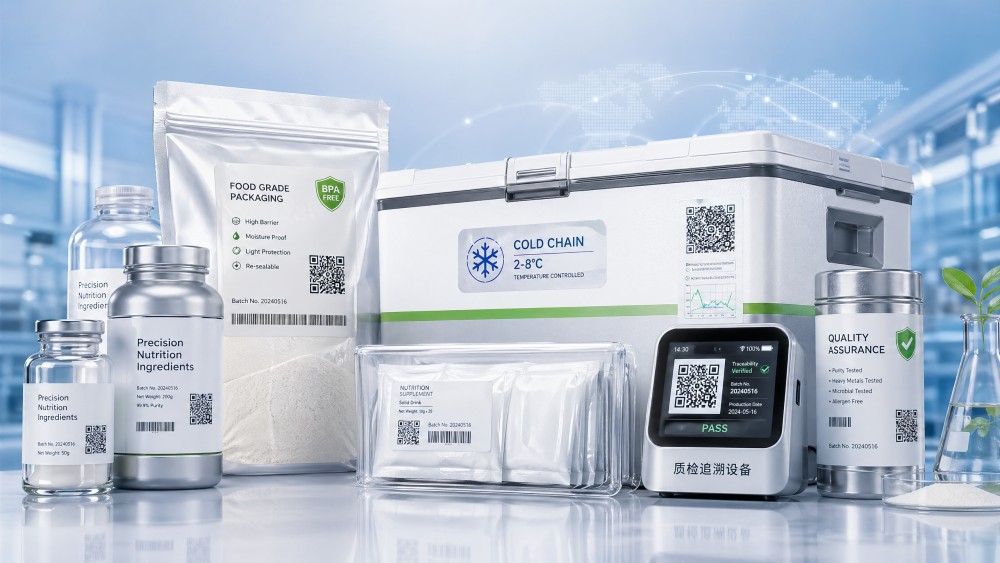
Traditional forecasting models often rely on quarterly sales history, annual policy cycles, and lagging consumer panels. Those tools are still useful, but they tend to underreact when three accelerators move at once: public health awareness, supply chain transparency, and rapid product innovation. In the current market, health demand can shift in 8 to 12 weeks, while many capital approval systems still update assumptions every 2 to 3 quarters.
In agri-food and life-linked sectors, earlier demand emergence is also tied to a wider definition of health. Buyers no longer separate nutrition, safety, sustainability, and performance as isolated criteria. A procurement team evaluating ingredients, cold-chain systems, or infant-safe packaging may now treat all four as part of one value equation. That compresses decision windows for manufacturers, distributors, and investors.
Another driver is the speed of information transfer. Trade barriers, subsidy adjustments, clinical innovation headlines, and AI-enabled formulation changes can influence purchasing behavior long before official market forecasts are revised. For financial approvers, this means demand signals may become visible first in tender activity, supplier inquiries, pilot volumes, and compliance audits rather than in year-end market reports.
Key catalysts reshaping timing assumptions
Several recurring catalysts are pushing Health Demand Trends forward faster than expected. These are not one-off anomalies. They represent structural changes in how health-linked value is created and evaluated across the value chain.
- Consumer risk sensitivity has risen, especially in infant nutrition, senior care nutrition, and traceable food categories.
- Regulatory pressure is moving upstream, making farms, processors, and packaging suppliers part of the health assurance chain.
- AI-assisted R&D is shortening product refinement cycles from 12 months to 4 to 8 months in some categories.
- Retail and institutional buyers are raising specification requirements before long-term market averages fully adjust.
When these factors combine, financial reviews based only on historic utilization rates can underestimate near-term demand readiness. This is where intelligence platforms add value by connecting market movement to spend timing, not just to abstract trend descriptions.
Where Financial Approvers Should Focus Capital Attention First
Not every health-linked opportunity deserves accelerated funding. The most defensible approvals usually sit where early demand is visible, operational leverage is realistic, and margin resilience can be preserved. In practical terms, finance teams should prioritize areas where demand uplift can be translated into measurable throughput, compliance advantage, or premium pricing within 2 to 6 quarters.
In the GALM context, this often includes precision nutrition inputs, food safety infrastructure, traceability systems, AI-supported quality management, and age-specific product development. These areas sit close to the “farm to table” and “nursery to elder care” continuum, where demand signals are increasingly linked. A company investing in one node of the chain may benefit only if adjacent nodes are also readiness-tested.
For example, approving expanded production of fortified ingredients without checking packaging validation, cold storage capability, and export compliance can shift a growth investment into a bottleneck. Financial approvers should therefore evaluate demand capture at the system level, not at the SKU level alone.
Priority investment zones by decision logic
The table below helps frame where Health Demand Trends are most actionable for capital reviewers. It compares common investment zones based on signal strength, approval urgency, and expected value pathway.
A clear pattern emerges: the strongest approval cases are rarely the most visible consumer-facing bets. They are often the enabling capabilities that help a business absorb early demand safely, compliantly, and at acceptable gross margin. Finance teams that recognize this can avoid overfunding demand stories while underfunding delivery infrastructure.
A practical 4-point approval screen
- Check whether demand signals appear in at least 3 sources: customer requests, regulatory movement, and channel purchasing behavior.
- Estimate whether the capability can be activated within 90 to 180 days rather than beyond 12 months.
- Test adjacent bottlenecks across sourcing, production, packaging, and logistics.
- Confirm whether the investment supports either risk reduction, premium realization, or share gain, ideally two of the three.
Using a disciplined screen like this helps financial approvers avoid broad thematic spending and focus instead on approval-quality opportunities supported by operational logic.
How to Evaluate Risk When Demand Moves Faster Than Budget Cycles
Earlier-than-expected Health Demand Trends create a difficult tradeoff. Approve too slowly and the organization misses commercial timing. Approve too quickly and capital may be committed before operational readiness is verified. The answer is not to eliminate risk, but to separate reversible risk from structural risk during the approval process.
Reversible risks include phased tooling, pilot-scale procurement, temporary contract manufacturing, or modular traceability deployments. These can often be adjusted within 30 to 120 days. Structural risks are harder to unwind and may include new plant construction, long-term exclusive sourcing, or oversized category bets based on a single region or channel.
For financial approvers, one useful discipline is to assign different hurdle expectations based on investment reversibility. A modular quality data system might justify a faster review path than a multi-year capacity expansion, even if both are linked to the same demand trend. That approach protects agility without weakening governance.
Risk categories finance teams should test
The following matrix helps translate trend excitement into measurable review questions. It is especially useful when health demand is crossing from niche to mainstream and timing confidence is still forming.
This structure gives finance a way to move from trend observation to approval discipline. The point is not to delay action. The point is to approve in stages that match signal quality and execution maturity.
Common approval mistakes
- Using annual average demand assumptions when category momentum is changing month by month.
- Approving production expansion before validating packaging, storage, or compliance throughput.
- Counting on premium pricing without confirming channel acceptance and claims substantiation.
- Treating health demand as purely consumer-led when institutional and regulatory buyers may move first.
Avoiding these mistakes can significantly improve return visibility. In many cases, the best financial decision is not a larger approval, but a better sequenced one.
Intelligence-Led Planning for Better Approval Confidence
When timing uncertainty rises, intelligence quality becomes as important as spreadsheet precision. Financial approvers need more than macro commentary. They need decision-ready intelligence that links market evolution to entry timing, capability readiness, and value-chain dependencies. This is where a portal such as GALM can support a stronger approval framework across agri-food and life-linked industries.
A useful intelligence system should combine at least 4 layers: sector news, evolutionary trend analysis, commercial entry signals, and adjacent risk mapping. Looking only at subsidy news or trade barriers is not enough. The more relevant question is how those developments affect supplier viability, product timelines, ingredient economics, and buyer specifications over the next 2 to 4 quarters.
This integrated view is particularly important when evaluating AI and biotech applications in food and life sciences. These technologies can improve forecasting, quality prediction, and targeted nutrition development, but their financial value depends on adoption fit, implementation speed, and regulatory practicality rather than on novelty alone.
A 5-step intelligence-to-approval workflow
- Detect early signals from cross-border trade movement, procurement activity, reformulation requests, and policy updates.
- Validate whether the signal affects one niche segment or a broader multi-segment health demand shift.
- Map capability gaps across sourcing, processing, packaging, logistics, and compliance controls.
- Model approvals in phases, usually pilot, scale-up, and capacity hardening over 3 stages.
- Track outcome indicators every 30, 60, and 90 days to adjust commitment levels.
For finance teams, this workflow converts uncertainty into managed optionality. It also strengthens communication with operations, procurement, and executive leadership because each approval stage is tied to observable evidence rather than to headline sentiment.
What intelligence should look like in practice
The most useful intelligence output is specific enough to support a yes, no, or defer decision. It should clarify whether health demand acceleration is local or global, temporary or structural, premium-led or compliance-led, and isolated or value-chain wide. A well-built commercial insight module can reveal whether a supplier should enter immediately, form partnerships first, or wait for one more demand confirmation cycle.
For organizations operating across the “great health” economy, that clarity can prevent both underinvestment and overreaction. Better approval confidence comes from seeing the chain, not just the trend.
FAQ for Financial Approvers Tracking Health Demand Trends
How can finance tell whether Health Demand Trends are structural or temporary?
Look for signal persistence across at least 2 to 3 review periods and across more than one indicator. If inquiry growth is accompanied by audit pressure, product reformulation activity, and stronger channel specifications, the trend is more likely structural. If demand appears only in one promotional period or one customer account, caution is warranted.
Which businesses are most exposed to early timing shifts?
Companies in fortified foods, infant and maternal nutrition, healthy aging products, ingredient systems, traceability services, cold-chain operations, and biotech-enabled food innovation are especially exposed. These segments often face 3 simultaneous pressures: compliance intensity, premium expectation, and faster formulation or specification cycles.
What approval horizon is most practical when demand is moving early?
A phased horizon usually works best. Many organizations use a 90-day pilot review, a 6-month scale checkpoint, and a 12-month hardening decision for larger commitments. This reduces the risk of locking in structural spend before execution proof is visible.
What should be prioritized first: demand capture or compliance readiness?
In health-linked sectors, compliance readiness often comes first because it determines whether demand can be converted into revenue safely. If labeling, traceability, infant safety controls, or cold-chain validation are weak, faster demand can actually increase operational exposure. The strongest approvals usually support both capture and control in parallel.
Health Demand Trends are no longer developing on the comfortable timelines that many approval systems were built around. Earlier demand emergence across agri-food, life sciences, and health-linked supply chains requires sharper signal detection, phased capital logic, and stronger coordination between market intelligence and financial governance.
For decision makers, the most reliable path is to prioritize high-evidence opportunities, test reversibility, and evaluate the full value chain from farm to table and from nursery to elder care. GALM supports that process by connecting trend intelligence, commercial insight, and strategic planning in one decision-focused framework.
If your team is reviewing investments influenced by changing Health Demand Trends, now is the right time to refine your timing assumptions and strengthen approval confidence. Contact GALM to discuss tailored intelligence support, explore market entry implications, or learn more solutions for health-linked growth planning.
Related News
- China's Corn & Soybean Meal Export Prices Volatile; Southeast Asian Feed Mills Increase InquiriesMay 10, 2026China's corn & soybean meal export prices turn volatile—sparking urgent inquiries from Southeast Asian feed mills. Key for exporters of livestock automation, precision feeding systems & nutritional additives.
- Precision Nutrition for Athletes: What Actually WorksMay 09, 2026Precision Nutrition for athletes made practical: learn what actually works for endurance, strength, recovery, and competition with evidence-based strategies that improve performance and recovery.
- Nutritional Trends That May Shift Supplement Demand in 2026May 08, 2026Nutritional Trends set to reshape supplement demand in 2026. Discover key shifts, channel risks, and growth opportunities for distributors, agents, and market-entry partners.
- How Nutritional Innovation Is Reshaping New Product Development in 2026May 08, 2026Nutritional Innovation is reshaping new product development in 2026—discover how AI, precision nutrition, and health-driven demand are creating smarter portfolios and stronger competitive advantage.