




Search
Related News
- 00
0000-00
What drives the pricing of food policy trends analysis? - 00
0000-00
How supply-chain disruptions reshape Global Food Systems North America - 00
0000-00
What is driving the nutritional genomics market in Latin America? - 00
0000-00
What processing service information should be confirmed before outsourcing? - 00
0000-00
Can an Agricultural Trade Insights dashboard flag supply risks early?
Tags
Mayonnaise vs. Salad Dressing: Effects on Sandwich Flavor and Texture




The Spread Is Part of the Sandwich Structure
A sandwich can contain the same bread, protein, cheese, and vegetables yet feel surprisingly different when the spread changes. The reason is simple: a spread is not only a source of flavor. It affects moisture movement, ingredient adhesion, perceived richness, and the way each bite holds together.
Many shoppers use the terms “mayonnaise” and “salad dressing” interchangeably because both are pale, creamy condiments often kept near one another in the refrigerator. For sandwich making, though, they tend to behave differently. The difference becomes especially clear in cold deli sandwiches, packed lunches, burgers, wraps, and sandwiches prepared several hours before eating.
Choosing between them is less about which condiment is universally better and more about the sandwich’s ingredients, serving temperature, storage time, and desired eating experience. A rich roast chicken sandwich may benefit from a different spread than a sweet ham-and-cheese sandwich, while a lunchbox sandwich faces moisture risks that do not matter as much in a sandwich eaten immediately.
Why Mayonnaise and Salad Dressing Taste Different
Traditional mayonnaise is generally an oil-in-water emulsion, commonly built from oil, egg or egg-derived ingredients, an acid such as vinegar or lemon juice, and seasonings. Its character is usually fuller, more savory, and more fatty on the palate. The fat helps carry aromatic compounds from herbs, roasted meat, pepper, garlic, and spices, making some fillings taste rounder and less sharp.
Salad dressing, especially the creamy sandwich style sold in many retail markets, often has a sweeter and tangier profile. It may contain more sugar, vinegar, starches, or other ingredients intended to create a lighter, sweeter flavor. Its exact composition varies by product and region, so the label remains more useful than the category name alone.
That difference changes how the sandwich is perceived. A savory spread can make turkey, tuna, egg, bacon, grilled chicken, and roasted vegetables seem more substantial. A sweeter dressing can soften salty cured meats, balance sharp pickles, or give a familiar flavor to simple white-bread sandwiches. Neither result is inherently superior. The key question is whether the spread supports the filling or competes with it.
Texture Depends on More Than Thickness
People often describe one condiment as “thicker” than another, but thickness is only one part of texture. A sandwich spread has to coat ingredients evenly, remain where it is applied, and avoid turning bread gummy. Its performance depends on viscosity, oil content, emulsification, water activity, ingredient particle size, and the amount used.
A thicker spread may stay in place on sliced turkey or chicken and help shredded lettuce adhere to the filling. This can make a sandwich feel more cohesive, particularly when it is cut into halves or packed for travel. Yet a thick spread can still cause sogginess if it is spread directly onto soft bread in a generous layer and then left beside watery vegetables.
A thinner or more fluid dressing can spread quickly and distribute flavor with less product. That can be useful for dry fillings such as plain chicken breast, lean ham, or dense whole-grain bread. The trade-off is control. If the condiment flows too easily, it can collect near the bottom slice, seep through small gaps, and make the lower half of the sandwich unpleasantly wet.
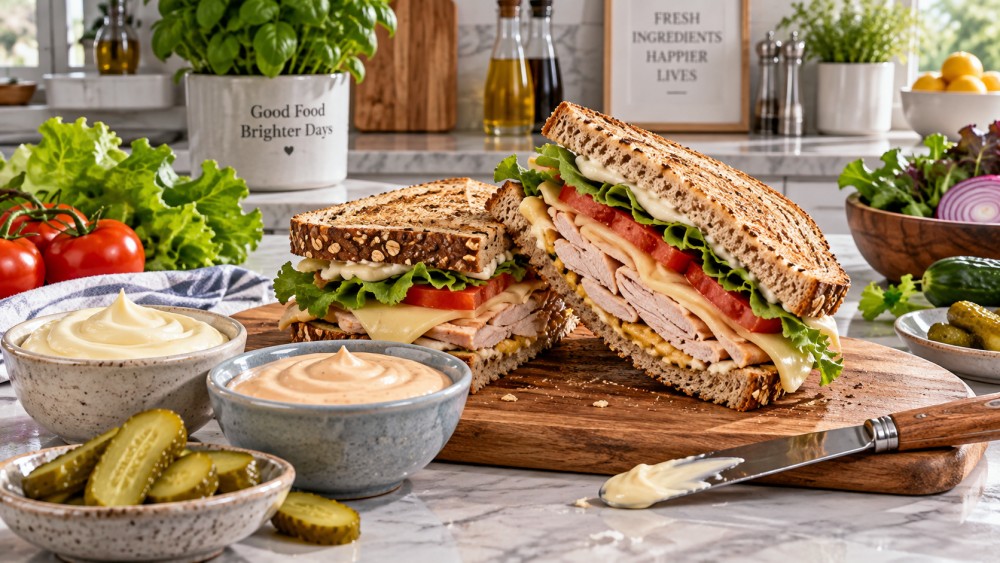
Moisture Migration Is the Main Lunchbox Problem
When a sandwich sits for several hours, moisture gradually moves between its ingredients. Tomatoes, cucumbers, pickles, cooked mushrooms, and dressed salads release water. Condiments can speed up the problem when they are placed directly against bread, especially soft white bread, brioche, or lightly toasted sandwich rolls.
The spread choice matters, but assembly order matters nearly as much. For a sandwich intended for later eating, place relatively dry, broad ingredients between the bread and wetter components. Cheese, large lettuce leaves, sliced meat, or a thin layer of butter can serve as partial barriers. A condiment may be applied to the protein or tucked between cheese and meat rather than spread across the entire bread surface.
Toast can help, but it is not a complete solution. A heavily toasted slice may resist moisture at first, then become tough as it cools. It also changes the sandwich’s balance, which may not suit delicate fillings. Denser breads, including some sourdoughs, seeded loaves, and firmer rolls, usually tolerate moisture better than very soft sandwich bread.
For packed sandwiches, consumers can use a simple test: make one sandwich as usual, wrap it, refrigerate it for several hours, then inspect the cut surface before eating. Look for darkened bread, pooling near the crust, slipping fillings, or an oily film. This small trial often reveals more than judging a condiment from the jar.
How Fat, Acid, and Sweetness Change Common Fillings
Richness is useful when a filling is lean, dry, or strongly seasoned. Chicken breast, canned tuna, hard-cooked egg, grilled vegetables, and roast turkey often need a coating that brings moisture and carries seasoning through the bite. In these cases, a savory emulsion can make the filling feel less dry without requiring extra salt.
Acidity has a different role. Vinegar or citrus notes cut through fatty cheese, bacon, salami, roast beef, and fried foods. Too much acid can make mild fillings taste thin or sharp, especially when the sandwich also contains pickles, mustard, vinegar-based slaw, or fermented vegetables. Consumers sometimes blame the bread or meat when the real issue is that several acidic ingredients are stacked together.
Sweetness can be helpful with salty ham, sharp cheddar, smoked meats, and crisp lettuce. It can also be distracting in tuna, egg, or herb chicken sandwiches where the goal is a more savory deli-style profile. Reading the ingredient list can offer clues: sugar or sweeteners near the beginning generally indicate a more prominent sweetness, though the final taste depends on the whole formula and serving amount.
Salt should be considered across the entire sandwich. Processed meats, cheese, pickles, and seasoned spreads can build quickly. A condiment with strong salt and acid may let a cook use less cured meat or fewer pickles, while a mild spread may need support from herbs, pepper, lemon, mustard, or fresh vegetables.
Flavored Spreads Need a Stability Check
Garlic, chipotle, herb, truffle-style, lemon, and spicy spreads can make an ordinary sandwich feel more distinct, but they add another decision: does the flavor remain balanced after the sandwich is assembled? Aromatic ingredients may become more noticeable as the sandwich rests, while fresh herbs and spices can be muted by cold storage.
A useful explanation of how Mayonnaise and salad dressing can change sandwich flavor and texture is to compare the spread before and after it has sat with the chosen filling. A condiment that tastes balanced from a spoon may seem overly sweet once paired with ham, or too garlicky after several hours beside grilled chicken. The bread can also absorb some flavor and moisture, changing the first bite more than the center filling.
Stability is especially relevant for flavored products. A spread that separates, becomes watery, or develops visible oil pooling can create uneven flavor and a messy sandwich. Consumers should follow storage directions, use clean utensils, and avoid leaving egg-based or dairy-containing spreads at room temperature for extended periods. If a sandwich includes perishable fillings such as meat, egg, seafood, or cheese, it should be kept cold until eating.
Practical pairings for sandwich makers
- Turkey and mild cheese: A savory, lightly seasoned spread keeps the filling from tasting flat. Sweet dressing can work if cranberry, apple, or honey notes are already part of the sandwich.
- Tuna or egg salad: A fuller-bodied spread usually creates the familiar creamy texture. Extra pickle brine, celery, onion, or mustard should be added cautiously so the mixture does not become loose.
- Ham and cheddar: A tangier or slightly sweet dressing can offset salt and smoke. Use a restrained amount if the sandwich also includes pickles or sweet relish.
- Grilled chicken and vegetables: Herb, garlic, or pepper flavors can work well, but watery roasted vegetables should be drained before assembly.
- Plant-based fillings: Bean patties, roasted vegetables, and chickpea mixtures often benefit from a creamy spread, although crisp greens should be kept away from hot fillings to prevent wilting.
What to Check on the Label
For everyday home use, the best choice may come down to label details rather than the front-of-pack name. Start with the ingredients that affect personal preferences: egg content, oils used, added sugar, salt, allergens, and flavorings. People managing an egg allergy need an egg-free alternative; those avoiding certain oils or watching sodium may find significant differences between products that look similar on the shelf.
Nutrition information is also best interpreted in context. A spread is usually used in a small portion, but a large sandwich can contain several tablespoons. The same applies to reduced-fat options. Lower fat may suit some dietary needs, yet it can change mouthfeel and may lead users to add more product if the sandwich feels dry. The most satisfying choice is often the one that provides enough flavor and lubrication in a measured amount.
Jar size matters for households that use spreads occasionally. A large container can appear economical, but it is less practical if it lingers in the refrigerator beyond its recommended use period after opening. Smaller packs or single-serve portions may make sense for travel, picnics, and packed lunches, provided they are handled according to the product’s storage instructions.
Building a Better Sandwich Through Small Adjustments
Rather than changing every ingredient at once, adjust one variable. Try the same bread and filling with a savory spread one day and a sweeter dressing the next. Keep the quantity consistent. This makes it easier to identify whether the difference comes from sweetness, acidity, richness, or moisture control.
Use less spread than seems necessary at the start, then add more only if the filling remains dry. Spread it in a thin, even layer instead of leaving thick patches near the center. For loose fillings such as tuna salad or chicken salad, mix the condiment into the filling until it is cohesive but not wet enough to drip from a spoon.
The most dependable sandwich is one whose spread matches its purpose. A sandwich eaten immediately can tolerate a looser, more expressive condiment. A sandwich for a commute, school bag, or picnic needs more attention to moisture barriers, cold storage, and restrained portions. Once those conditions are clear, the choice between a savory creamy spread and a sweeter dressing becomes far easier to make.
Related News
- Mayonnaise vs. Salad Dressing: Effects on Sandwich Flavor and TextureSep 29, 2026Mayonnaise vs. salad dressing: discover how each spread shapes sandwich flavor, texture, moisture control, and smarter packed-lunch pairings.
- When pilot production is needed before scaling a food processSep 21, 2026Pilot production helps food manufacturers reduce scale-up risk by validating process stability, safety, yield, packaging, and cleaning before commercial investment.
- What to verify before selecting a food engineering manufacturerSep 20, 2026Food Engineering manufacturer selection made easier: verify process fit, hygienic design, automation, quality records, delivery scope, and lifecycle support.
- When should you hire an industrial project solutions contractor?Sep 18, 2026Industrial project solutions contractor: discover when complex scopes, site risks, and shutdown constraints require coordinated delivery for safer, smoother project success.