




Search
Related News
- 00
0000-00
Life sciences trends analysis: Which innovations are gaining traction? - 00
0000-00
Cold Chain Delivery Efficiency: Cutting Delays Without Temperature Excursions - 00
0000-00
Stainless Steel Beverage Tanks: A Buyer Checklist for Production Lines - 00
0000-00
How nutritional economic trends are changing supplement pricing - 00
0000-00
How to assess a commercial project solutions supplier before awarding a contract
Is intensive automation worth the barn retrofit?




【Executive Summary】:For business evaluators weighing a barn retrofit, intensive automation is no longer just a labor-saving upgrade—it is a capital decision tied to productivity, animal welfare, energy use, and long-term competitiveness. From robotic feeding and manure handling to sensor-driven climate control, the real question is whether the expected gains justify installation costs, downtime, and operational change. This article examines the strategic factors that determine when automation delivers measurable value and when a phased retrofit may be the smarter path.
In agricultural machinery planning, the barn is now a data-producing asset, not only a shelter for animals and equipment. Evaluators must compare mechanical capacity, digital readiness, and operational discipline before approving major automation spending.
Where intensive automation changes barn economics
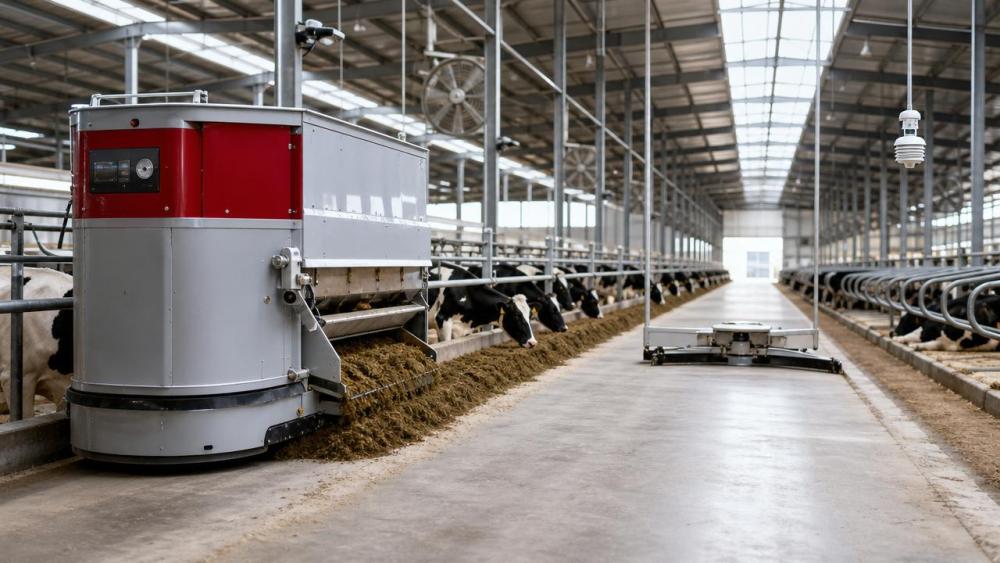
Intensive automation usually combines 3 to 6 machine groups: feeding, milking, manure removal, bedding, ventilation, and sensor monitoring. The value case depends on how these systems interact inside an existing barn.
For a business evaluator, the first question is not whether the technology is modern. It is whether the retrofit removes bottlenecks that currently limit throughput, consistency, or animal health outcomes.
Core retrofit scenarios
Dairy barns often prioritize robotic milking, automated feed pushers, and cow traffic systems. Poultry and pig facilities may focus more on climate control, manure handling, weighing, and dosing accuracy.
A retrofit makes stronger financial sense when the barn already has 70% to 80% of the structural readiness required. Floors, alleys, electrical capacity, and drainage should be checked before supplier selection.
- Labor-intensive barns with 2 or more repetitive manual shifts per day.
- Facilities with frequent feed inconsistency, delayed manure removal, or heat stress events.
- Operations planning herd or flock expansion within 18 to 36 months.
- Farms needing traceable data for processors, lenders, insurers, or sustainability programs.
What automation actually measures
Modern barn machinery does more than move feed or scrape alleys. Sensors capture temperature, humidity, feed intake patterns, animal movement, equipment runtime, and alarm histories every few minutes.
This data layer helps evaluators test whether intensive automation supports measurable management gains. A feeding robot with poor ration discipline, for example, may automate inconsistency rather than solve it.
Capital evaluation: cost, payback, and risk thresholds
A barn retrofit should be assessed as a 5 to 10 year asset decision. Installation cost is only one part of the calculation, alongside downtime, energy demand, service access, and staff adaptation.
For intensive automation, the payback range can vary widely because baseline performance differs. Evaluators should build scenarios rather than rely on a single supplier quotation or an optimistic labor-saving estimate.
Decision factors to quantify before approval
The table below organizes practical evaluation factors for agricultural machinery retrofits. It helps compare full automation, partial automation, and delayed investment using common business review language.
The key conclusion is that intensive automation must be evaluated against farm-specific constraints. A system with excellent technical capacity can still underperform if utility supply, workflow, or service coverage is weak.
Payback is not only labor reduction
Labor savings are visible, but they are not always the largest value driver. Reduced feed waste, steadier animal routines, lower disease pressure, and earlier fault detection may carry equal importance.
A practical model should use 3 cases: conservative, expected, and expansion-linked. Each case should include maintenance cost, software fees, depreciation, training, and a contingency of 8% to 15%.
Red flags in the business case
- The retrofit depends on one unrealistic assumption, such as immediate 30% labor reduction.
- The quote excludes electrical upgrades, drainage changes, gates, or concrete modifications.
- Staff training is limited to 1 day despite multiple control systems.
- There is no written service response plan for critical failure events.
Technical fit: barn layout, machinery integration, and data flow
The success of intensive automation is often decided before equipment arrives. Accurate surveying, utility mapping, and animal movement analysis are essential during the first 2 to 4 weeks.
Older barns can be automated, but not every old barn should receive a full retrofit at once. Space limitations, ceiling height, water lines, and drainage slope can restrict machinery options.
Integration points that evaluators should inspect
The following comparison highlights common machinery modules and the integration conditions they require. It can support technical due diligence before commercial negotiation with equipment suppliers.
The table shows why intensive automation cannot be purchased as isolated hardware. Each module affects animal movement, cleaning routines, power demand, and the reliability of operational data.
Data flow and management readiness
A sensor-rich barn generates value only when someone acts on the information. Dashboards should translate alerts into work orders, not create 50 unresolved notifications every week.
Evaluators should confirm who owns system data, how records are exported, and whether the platform connects with herd management, maintenance logs, or sustainability reporting tools.
- Set 5 to 10 priority alerts instead of activating every available notification.
- Define response responsibilities by shift, including weekends and seasonal labor peaks.
- Review machine runtime, error codes, and animal behavior data at least weekly.
Phased retrofit versus full automation
A full barn retrofit can be attractive when facility structure, cash flow, and management capacity are aligned. However, phased intensive automation often reduces disruption and improves learning speed.
For many farms, a 3-stage roadmap works better than a single large installation. Start with the worst bottleneck, stabilize performance, then add connected modules after 6 to 12 months.
A practical 3-stage implementation path
- Audit the barn, utility capacity, animal flow, and manual task timing over 14 to 30 days.
- Install one high-impact module, such as feeding, scraping, or climate control, with measurable baseline targets.
- Integrate data dashboards, maintenance routines, and additional machinery only after staff procedures stabilize.
This staged approach helps evaluators see whether intensive automation creates real operational discipline. It also limits the risk of simultaneous failure across unfamiliar mechanical and digital systems.
When a full retrofit is justified
Full automation is more defensible when the barn is undergoing major renovation anyway. If concrete, drainage, wiring, and ventilation are already being replaced, integration costs may be lower.
It is also justified when labor availability is structurally constrained, not temporarily expensive. If the business cannot staff 2 daily animal-care shifts reliably, automation becomes strategic resilience.
Procurement questions to ask suppliers
- What civil works are excluded from the quotation, and who is responsible for design coordination?
- What parts should be stocked on site for the first 12 months?
- How many operator training sessions are included, and can refresher training be scheduled after commissioning?
- What data export formats are available for herd, flock, maintenance, or compliance systems?
Operational risks, maintenance, and long-term competitiveness
Intensive automation reduces some risks while introducing others. Fewer manual steps can improve consistency, but a failed controller, blocked scraper, or network outage can disrupt the entire routine.
Business evaluators should therefore treat maintenance as a strategic cost center. Preventive inspection intervals, spare parts policy, and supplier response capability should be reviewed before signing.
Maintenance planning that protects ROI
A reasonable maintenance plan includes daily visual checks, weekly cleaning of exposed sensors, monthly mechanical inspection, and quarterly review of alarms and runtime patterns.
Critical parts may include brushes, belts, scraper blades, sensors, fuses, valves, and charging contacts. Keeping a basic stock can shorten downtime from 24 hours to a few hours.
- Assign one responsible technician or manager for each automation category.
- Document fault codes, service calls, and repair time in a single log.
- Schedule software updates outside feeding, milking, or cleaning peak periods.
- Test backup power and manual override procedures at least twice per year.
Animal welfare and sustainability signals
Barn automation increasingly supports welfare and sustainability reporting. Stable ventilation, cleaner alleys, regular feeding, and earlier health alerts can strengthen processor relationships and financing narratives.
For GALM’s audience of decision makers, this connection matters. Agricultural machinery is becoming part of a larger agri-food intelligence chain linking farm precision to food quality and health expectations.
The strongest business cases combine mechanical performance with verifiable records. Intensive automation should therefore be selected not only for movement capacity, but for the quality of decisions it enables.
Final guidance for business evaluators
Intensive automation is worth the barn retrofit when it solves a defined operational constraint, fits the building, and has a credible maintenance and training plan. Technology alone is not enough.
If the barn requires heavy structural repair, utilities are insufficient, or staff roles are unclear, a phased retrofit may protect capital better than immediate full automation.
GALM helps evaluators connect machinery decisions with market trends, sustainability expectations, and agri-food value chain strategy. This intelligence-led view supports more disciplined investment choices.
To benchmark your retrofit assumptions, compare automation modules, or build a phased investment roadmap, contact GALM to get a customized solution and explore more agricultural machinery insights.
Related News
- Evaluating Layer Cage Layouts for a 1,000-Chicken Farm ExpansionSep 18, 2026Taiyu(HK) poultry farm equipment guide for evaluating efficient layer cage layouts, access, ventilation, manure handling, and growth planning for 1,000-chicken farms.
- What to compare when choosing a smart manufacturing systems manufacturerSep 02, 2026Smart manufacturing systems manufacturer selection guide: compare integration, data quality, cybersecurity, scalability, and lifecycle support for resilient production.
- Are Industrial Automation Upgrades Worth It for Mid-Size Plants?Sep 10, 2026Are industrial automation upgrades worth the investment for mid-size plants? Explore ROI, bottlenecks, quality gains, and practical steps for smarter automation decisions.
- When do smart manufacturing production systems deliver a real ROI?Aug 19, 2026Smart manufacturing production systems deliver real ROI when they reduce downtime, improve traceability, and cut waste. Discover when investment pays back fastest.