




Search
Related News
- 00
0000-00
Global Health Demands Driving New Dietary Supplement Formats - 00
0000-00
Value Chain Optimization Tactics for Safer Packaging Systems - 00
0000-00
Precision Health Economics Models That Support Product Launches - 00
0000-00
Health Demand Trends Shaping the Next Nutrition Tech Market - 00
0000-00
Green Supply Chain Analytics: Cost vs Compliance Trade-Offs
What Makes AI in Agriculture the Next Big Shift by 2026




As climate pressure, labor shortages, and supply chain volatility reshape global food systems, the AI in Agriculture future is moving from concept to boardroom priority. By 2026, enterprises that understand how AI transforms production, quality, and market intelligence will gain a sharper competitive edge. This article explores why AI is becoming the next major shift for decision makers across the agri-food value chain.
For enterprise leaders, the conversation is no longer about whether digital tools belong in agriculture, but how quickly they can produce measurable value across production, sourcing, compliance, logistics, and consumer-facing nutrition strategies. In practice, AI is becoming a decision infrastructure that connects field data, machinery, biological risk signals, demand forecasting, and value-chain planning.
This matters especially in a market where a 3% to 8% yield variance, a 24-hour delay in cold-chain response, or a 2-week forecasting error can materially affect margin, contract performance, and brand trust. For organizations tracking the AI in Agriculture future, the strategic question is how to convert intelligence into resilient operations before 2026 sets a higher competitive baseline.
Why 2026 Is a Turning Point for AI Adoption in Agriculture
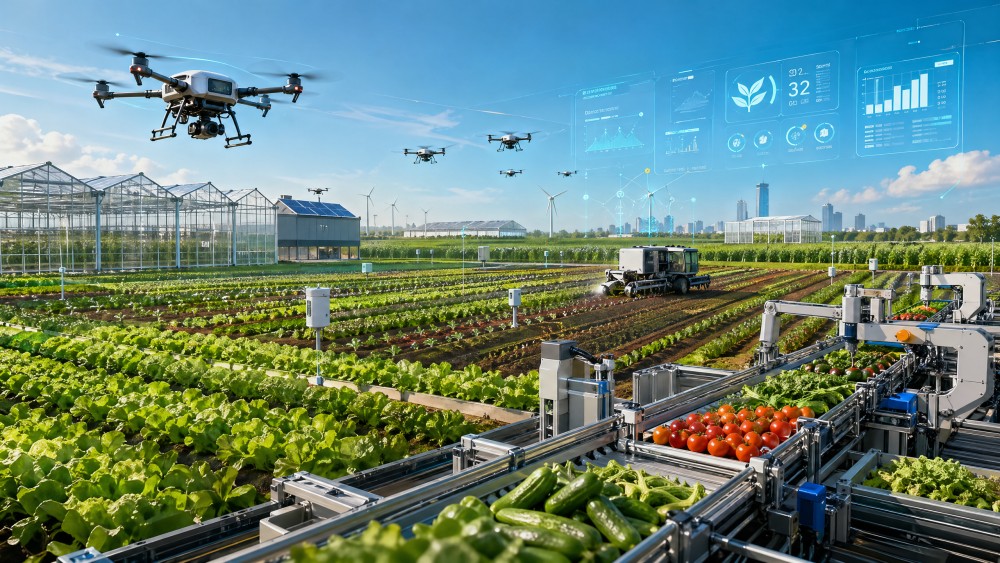
The timing is not accidental. By 2026, several forces are expected to converge: tighter climate variability, more expensive agricultural labor, wider sensor deployment, and stronger pressure from retailers and regulators for traceability. What used to be an innovation pilot is becoming an operational requirement. The AI in Agriculture future is advancing because the cost of inaction is rising faster than the cost of implementation.
For large growers, food processors, ingredient suppliers, and agribusiness investors, AI offers a way to manage complexity at scale. A single enterprise may need to interpret 5 to 10 data streams at once, including weather, soil conditions, machinery usage, disease alerts, procurement timing, and demand shifts. Manual analysis struggles when decisions must be updated daily, or even every 4 to 6 hours during high-risk periods.
Another reason 2026 matters is maturity. Over the past 3 to 5 years, the underlying ecosystem has improved: computer vision is more usable in open-field and greenhouse settings, edge devices are more affordable, and cloud analytics are easier to integrate with ERP, MES, and supply-chain platforms. Enterprises no longer need a perfect digital farm to benefit. They can start with one crop, one region, or one processing line and scale in phases.
For strategic platforms such as GALM, this shift also expands beyond farming alone. AI in the agri-food system increasingly links production with nutrition, food safety, trade intelligence, and market-entry strategy. That broader view is crucial for decision makers who are not only buying technology, but also evaluating future demand, regulatory exposure, and cross-border supply resilience.
The boardroom drivers behind accelerated investment
- Margin protection: even a 2% to 5% reduction in input waste can improve profitability in high-cost seasons.
- Risk management: AI can flag disease, irrigation stress, or logistics anomalies 12 to 72 hours earlier than manual review.
- Traceability pressure: export-oriented businesses increasingly need digital audit trails across 3 or more supply stages.
- Labor efficiency: in labor-tight regions, automating repetitive scouting or grading tasks can reduce dependency on scarce field teams.
Where AI Creates Value Across the Agri-Food Value Chain
The AI in Agriculture future should not be viewed narrowly as a farm tool. Its strongest business case often comes from connecting multiple value-chain decisions. In upstream operations, AI can support crop planning, irrigation timing, pest and disease detection, and machinery performance. In midstream processes, it improves grading, quality consistency, inventory planning, and process control. Downstream, it supports demand sensing, route planning, and precision nutrition insights.
For example, a processor handling fruit, grains, dairy inputs, or specialty ingredients may face losses at several points: raw material variability, delayed quality checks, fragmented supplier data, and inaccurate customer forecasts. If AI reduces quality-inspection lag from 8 hours to 1 hour, or improves forecast accuracy by 10% to 15% during volatile periods, the operational effect can be significant even before full automation is achieved.
Decision makers should also note that use cases differ by business model. A grower-exporter may prioritize disease alerts and harvest timing. A food manufacturer may focus on quality grading and supplier traceability. A nutrition-oriented enterprise may use AI to connect ingredient provenance, safety thresholds, and changing health demand. The strategic value depends on which bottleneck is most expensive today.
High-impact AI applications by business function
The table below shows how common AI applications map to practical business outcomes. Rather than treating AI as a generic innovation theme, enterprises should identify the 2 to 3 functions where data-driven intervention can deliver returns within 6 to 18 months.
The key takeaway is that AI does not create value in isolation. It creates value when linked to a real operational decision: spray now or wait 48 hours, accept or reject a lot, redirect inventory, adjust sourcing, or reprice supply commitments. That is why the AI in Agriculture future is so relevant to enterprise strategy rather than only technical experimentation.
Three signs a use case is ready for enterprise rollout
- The process repeats frequently, such as daily scouting, line inspection, or weekly forecast updates.
- The business already captures at least 6 to 12 months of usable operational data, even if it is imperfect.
- The outcome affects measurable KPIs like reject rate, downtime, input use, labor hours, or service level.
What Enterprise Buyers Should Evaluate Before Investing
The AI in Agriculture future attracts attention, but poor buying decisions still happen when companies focus on dashboards before data foundations. Enterprise buyers should assess not only model performance, but also hardware fit, integration effort, training requirements, and governance. A tool that works in a controlled pilot may fail in a dusty field, a humid packhouse, or a fragmented supplier network.
A practical procurement framework usually includes 4 layers. First, define the operating problem in measurable terms. Second, verify data inputs and collection frequency. Third, test the deployment environment, whether edge, cloud, or hybrid. Fourth, determine who will act on the AI output and how quickly. If recommendations sit unused for 72 hours, even a strong model has weak business value.
Leaders should also watch for hidden costs. These may include sensor maintenance every 3 to 6 months, image-labeling effort during the first 8 to 12 weeks, integration with existing ERP or quality systems, and seasonal recalibration. In many cases, the total project outcome depends less on algorithm sophistication and more on operational discipline after deployment.
A practical procurement checklist for decision makers
The table below can help executives compare vendors or internal development options more consistently. It is especially useful when evaluating multiple pilots across regions, crops, factories, or sourcing programs.
The strongest procurement strategy is to begin with a use case that has clear economics and manageable scope. A 90-day pilot linked to one greenhouse unit, one procurement region, or one quality line often reveals more than an overextended multi-site launch. For buyers studying the AI in Agriculture future, speed of learning is often more important than immediate enterprise-wide coverage.
Selection criteria that deserve executive attention
- How often the model needs recalibration across seasons, varieties, or geographies.
- Whether recommendations are explainable enough for agronomy, quality, and compliance teams.
- Expected time to value, typically 3 to 9 months for focused deployments rather than full transformation.
- Data governance rules for supplier information, biological risk records, and cross-border commercial intelligence.
How to Implement AI Without Disrupting Core Operations
Implementation succeeds when AI is introduced as an operational workflow, not just a software layer. The most resilient programs usually move through 3 stages: diagnostic scoping, controlled deployment, and scaled integration. This sequence allows teams to validate technical fit, process ownership, and economic impact before extending AI across more facilities or sourcing regions.
In stage one, organizations should define baseline metrics over a 4- to 8-week period. These can include crop loss, line reject rate, labor hours per inspection cycle, water usage per hectare, or forecast error by product category. Without a baseline, it becomes difficult to determine whether the AI in Agriculture future is creating measurable improvement or just producing more reports.
Stage two involves deployment in a limited environment. This may include one production cluster, one crop window, one cold-chain route, or one processing line. The goal is not perfection. The goal is to test decision loops: who receives the alert, how fast the team responds, how exceptions are documented, and whether the recommendation is practical under real operating pressure.
Stage three focuses on scale. At this point, enterprises should align AI outputs with procurement policy, quality protocols, maintenance schedules, and commercial planning. This is where intelligence platforms like GALM can add strategic value by connecting operational signals with broader trade shifts, subsidy trends, biotech developments, and global demand changes that influence longer-term investment choices.
A simple implementation roadmap
- Map one high-cost decision process and define 3 to 5 KPIs.
- Audit available data sources, including sensor, imagery, machinery, ERP, and quality records.
- Run a pilot for 8 to 12 weeks with clear response owners and reporting cadence.
- Review ROI, false positives, user adoption, and integration gaps before scale-up.
- Expand to adjacent sites or categories only after workflow reliability is proven.
Common rollout mistakes to avoid
One common mistake is trying to digitize every process at once. Another is assigning AI oversight only to IT, even though agronomy, operations, procurement, and quality teams are the actual users. A third is neglecting seasonal variation. A model trained in one harvest window may need adjustment in the next 6-month cycle, especially in climate-sensitive crops or variable input conditions.
Successful programs also plan for human training. Even the best model fails if supervisors do not trust the output, or if field teams lack a protocol for response. In many enterprises, one of the highest-return investments is not extra software, but a clear operating rulebook for how AI recommendations trigger action within 30 minutes, 4 hours, or 24 hours depending on risk severity.
Strategic Risks, Governance, and the Role of Market Intelligence
The AI in Agriculture future is promising, but leadership teams should approach it with disciplined governance. Biological systems are variable, supply chains are exposed to policy shifts, and food-related decisions often carry compliance implications. AI can improve speed and pattern recognition, yet it should not replace agronomic judgment, quality expertise, or commercial review in high-impact decisions.
Governance starts with thresholds. Enterprises should define which outputs are advisory, which require manager approval, and which can trigger automated action. For example, a low-confidence pest alert may prompt manual inspection within 12 hours, while a repeated cold-chain anomaly may trigger immediate route intervention. This tiered approach reduces both false confidence and operational hesitation.
Another strategic risk is local optimization without market context. A company may improve yield or quality at site level but still lose margin if global trade barriers, subsidy shifts, or demand changes alter the economics of distribution. This is why decision makers increasingly need intelligence that combines operational AI with broader sector signals, from life-science innovation to consumer nutrition trends.
FAQ for enterprise decision makers
How fast can an enterprise expect results?
Focused pilots often show directional results in 8 to 12 weeks. Broader gains such as procurement alignment, quality consistency, or multi-site forecasting usually need 6 to 12 months, depending on integration depth and seasonal cycles.
Which businesses are best positioned to benefit first?
Enterprises with repeatable workflows, data capture at least weekly, and a clear cost bottleneck tend to benefit earliest. This includes growers, processors, exporters, ingredient suppliers, and health-oriented food businesses seeking stronger traceability and planning precision.
What are the most common misconceptions?
A common misconception is that AI requires fully digitized operations before value can appear. Another is that a high model accuracy score automatically means commercial success. In reality, adoption, workflow fit, and response timing are often more decisive than model performance alone.
Why does market intelligence matter alongside operational AI?
Because production decisions do not happen in isolation. Enterprises need to connect field or factory intelligence with subsidy updates, trade barriers, consumer demand patterns, and biotech trends. That broader view helps turn short-term efficiency into long-term strategic advantage.
By 2026, the companies that lead in agri-food will likely be those that combine operational data, biological insight, and market intelligence into one decision framework. The AI in Agriculture future is not simply about smarter farms. It is about building more adaptive, traceable, and commercially resilient food systems from farm to table.
For enterprise decision makers, the best next step is to identify one high-impact use case, test it against real KPIs, and align it with broader supply-chain and market realities. GALM supports this process by connecting sector intelligence, evolutionary technology trends, and actionable commercial insight across the agri-food and life-value chain.
If your organization is evaluating where AI can create the strongest strategic return in production, food quality, nutrition-linked innovation, or global market entry, now is the time to move from observation to action. Contact us to explore tailored intelligence, implementation priorities, and solution pathways for the next phase of growth.
Related News
- Sustainable Agriculture Practices That Improve Soil ROIMay 15, 2026Sustainable Agriculture practices that improve soil ROI: discover how cover crops, no-till, rotations, and precision nutrients reduce risk, cut costs, and strengthen long-term farm value.
- Agricultural Economics Trends Shaping 2026 Farm InvestmentMay 14, 2026Agricultural Economics trends are reshaping 2026 farm investment through policy, AI, biotech, and sustainability. Discover the signals driving smarter returns and lower risk.
- Sustainable Agriculture Solutions: Cost vs Long-Term YieldMay 14, 2026Sustainable Agriculture solutions: compare upfront costs with long-term yield, resilience, compliance, and ROI. Learn how smarter agri investments reduce risk and support stronger returns.
- Sustainable Food Systems: Cost Pressures and Practical Trade-OffsMay 13, 2026Sustainable Food Systems face real cost pressures across sourcing, energy, packaging, and compliance. Explore practical trade-offs, scenario-based strategies, and smarter moves that protect margins and build resilience.