




Search
Related News
- 00
0000-00
How to assess a commercial project solutions supplier before awarding a contract - 00
0000-00
How food policy trends are reshaping sustainable sourcing decisions - 00
0000-00
What drives infant care products price differences across brands? - 00
0000-00
How quality assurance in bioprocessing prevents batch-to-batch variability - 00
0000-00
When do nutritional innovation ingredient solutions improve supplement formulation?
Tags
Cost Of Starting A Poultry Farm In Nigeria: Buyer Checks for Nigerian Poultry Farms




The cost of starting a poultry farm in Nigeria cannot be answered responsibly with a single number that fits every farm. A small broiler project, a layer farm using battery cages, a semi-automatic house, and a larger commercial operation all have different budget structures. Location, land access, building condition, equipment scope, power reliability, feed sourcing, labor, and biosecurity requirements can change the real investment before the first flock enters the house.
A useful budget therefore starts with categories, not guesswork. Buyers should separate construction, cages or floor equipment, feeding and drinking systems, ventilation, power, water, feed storage, manure handling, day-old chicks or pullets, vaccines and health management, labor, transport, and contingency. This approach helps the farm compare supplier quotations without depending on unsupported price claims.
Start With the Farm Model
The first question is whether the project is for layers, broilers, breeders, or mixed production. Layers usually require more attention to cages or nesting, egg handling, long-term feeding, and flock management. Broiler farms focus more on flock turnover, floor conditions, ventilation, heating or brooding needs, and weight management. The budget should reflect the production model before equipment is selected.
Buyers should also decide whether they are building a new poultry house or converting an existing structure. A conversion may appear cheaper, but it can require repairs, drainage work, ventilation changes, door adjustments, floor correction, or stronger roof protection. A new house may cost more at first, yet it allows the layout to be planned around cages, workers, air movement, and cleaning routines.
Budget Categories Buyers Should Separate
A common mistake is to ask for "the poultry farm cost" as if the answer is one item. A more useful method is to build a budget table and ask suppliers to quote against each line. This makes it easier to identify missing equipment, unrealistic assumptions, and items that are being shifted to the buyer after the initial quotation.
Equipment Scope Can Change the Real Cost
Poultry equipment quotations can look similar while covering different items. One quotation may include cages only. Another may include drinking lines, feeding troughs, manure belts, motors, brackets, spare nipples, installation fasteners, and packing. A buyer who compares only the headline amount may choose the wrong offer. Ask each supplier to mark what is included, what is optional, and what the farm must buy locally.
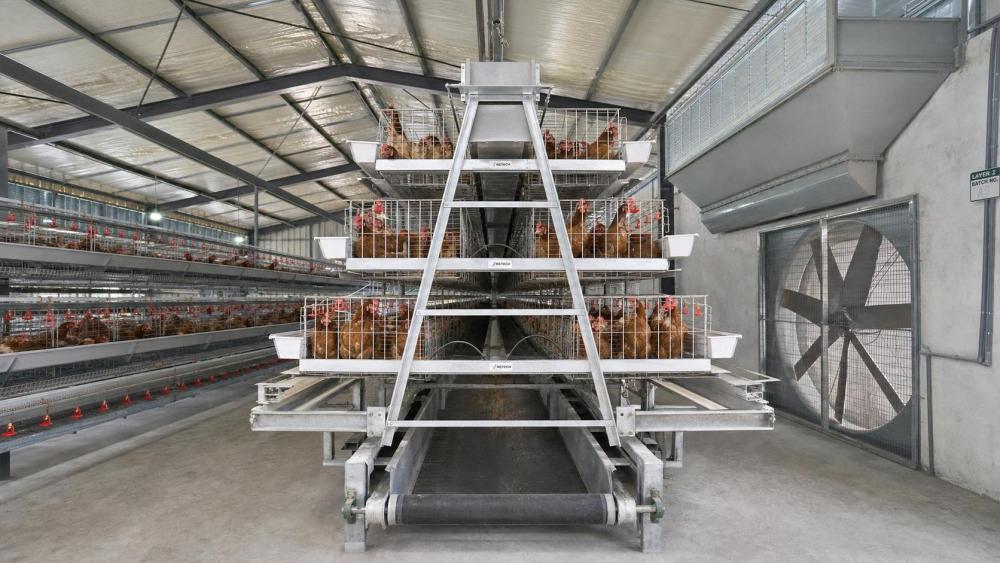
For layer farms, cage type, tier count, row layout, feeding method, drinking system, and manure removal method strongly influence cost. For broiler farms, brooding, ventilation, litter management, feeding points, water lines, and stocking plan are more central. The equipment should be matched to the production plan rather than selected only because it appears cheap.
Power, Water, and Climate Risks in Nigeria
In many Nigerian locations, power reliability and heat management deserve early attention. A farm that depends on fans, lighting, pumps, or automated feeding should consider backup power and basic electrical protection. Water supply should also be checked before the flock arrives. Drinkers, tanks, pipes, and pressure control are not small details when bird health and feed intake depend on daily water access.
Climate planning should reflect the site. Heat, humidity, dust, rainfall, and building orientation can affect ventilation design. A budget that ignores fans, inlets, shade, roof insulation, or emergency power may look attractive at first but can create management pressure later. Buyers should ask suppliers how their equipment plan fits local conditions rather than accepting a general product list.
Cash Flow and First-Cycle Preparation
Start-up budgets often focus on buildings and equipment, but the first production cycle also needs working capital. Feed, transport, labor, veterinary support, vaccines or preventive health inputs, cleaning materials, and replacement parts should be included. If the farm spends nearly all funds before birds arrive, it may struggle to maintain feed supply or respond to early problems.
Buyers should separate capital expenditure from operating cash. Capital items include the house, cages, water system, feed system, ventilation equipment, and installation. Operating preparation includes birds, feed, labor, cleaning, health management, and logistics. This separation helps the buyer see whether the plan can operate after construction is complete.
Some farms may also benefit from phased purchasing. For example, a buyer can prepare the house, water line, basic feeding equipment, and a manageable flock size first, then add higher automation or expanded capacity after the management routine is stable. This approach still requires careful planning, because the first phase should not block later expansion. Door positions, aisle space, power capacity, drainage, and ventilation should leave room for the next step.
Supplier Questions Before Paying a Deposit
A practical supplier discussion should include house drawings, equipment specifications, delivery terms, packing method, installation guidance, spare parts, and after-sales support. If the supplier is quoting cages or other equipment, ask how many birds the design assumes, what house size is needed, and how feed, water, manure, and worker access will be arranged.
Buyers reviewing the cost of starting a poultry farm in nigeria should treat supplier answers as part of risk control. A clear proposal should explain assumptions and missing items. If a quotation gives a low number without equipment scope, installation details, or site requirements, the buyer should ask for clarification before paying.
Procurement Checklist
- Define whether the farm is for broilers, layers, breeders, or mixed production.
- Confirm target bird count, house size, land availability, and local climate conditions.
- Separate building cost, equipment cost, first-cycle operating cash, and contingency.
- Request detailed equipment scope: cages, feeders, drinkers, manure handling, motors, and spare parts.
- Ask what must be purchased locally after imported or supplied equipment arrives.
- Review power, water, ventilation, and backup plans before confirming layout.
- Compare supplier quotations using the same assumptions and bird capacity.
- Keep a contingency reserve for freight, installation changes, repairs, and early flock needs.
How to Compare Proposals Fairly
Fair comparison means asking suppliers to quote the same farm model. The buyer should send the same bird count, house dimensions, production type, automation expectation, and climate notes to each supplier. If one supplier assumes manual cleaning and another assumes manure belts, the proposals are not directly comparable. If one includes installation accessories and another does not, the buyer should adjust the comparison.
It is also helpful to ask for a short explanation of the recommended system. The best proposal is not always the lowest figure. It is the one that explains equipment scope, layout logic, operating requirements, and what the buyer needs to prepare before installation and first stocking.
FAQ
Can one standard number describe poultry farm start-up cost in Nigeria?
No. Cost depends on production type, farm size, land and building condition, equipment scope, climate requirements, power and water access, labor, and first-cycle operating cash.
What is often missing from early budgets?
Commonly missed items include installation accessories, spare parts, backup power, water storage, ventilation adjustments, transport, cleaning materials, health management, and first-cycle feed.
Should buyers choose the lowest equipment quotation?
Not automatically. Buyers should compare full scope, material specifications, included systems, installation support, spare parts, packing, and assumptions behind the capacity.
Why is working capital important?
A farm still needs feed, labor, water, health inputs, transport, and cleaning after construction. Underfunding the first production cycle can create management pressure even if the equipment is installed well.
Editorial Review Note
This article is buyer-facing guidance for poultry farm budgeting and supply-chain planning. It avoids fabricated prices, unsupported profit claims, invented case numbers, and unverified production data. Final upload should be checked against the destination portal's house style before publication.
Related News
- How food policy trends are reshaping sustainable sourcing decisionsOct 07, 2026Food Policy Trends sourcing is reshaping sustainable supply chains. Discover how traceability, compliance, and resilience can protect market access and reduce risk.
- How supply-chain disruptions reshape Global Food Systems North AmericaSep 29, 2026Global Food Systems North America: discover how climate, trade, labor, and logistics disruptions are reshaping resilient food sourcing, operations, and growth.
- What processing service information should be confirmed before outsourcing?Sep 27, 2026Processing Service Information: learn what to verify before outsourcing, from technical fit and quality controls to capacity, pricing, traceability, and change management.
- Can an Agricultural Trade Insights dashboard flag supply risks early?Sep 26, 2026Agricultural Trade Insights dashboard: spot supply risks early by connecting weather, policy, logistics, and supplier exposure to smarter sourcing decisions.