




Search
Related News
- 00
0000-00
How farm size affects agricultural innovation adoption in Europe - 00
0000-00
When do food supply chain disruptions justify higher safety stock? - 00
0000-00
How to identify purchase drivers through consumer behavior analysis - 00
0000-00
How to audit a clean label food ingredient supplier's factory - 00
0000-00
Can rotary jet technology cut water use in beverage tank cleaning?
What livestock management data actually matters?




For technical evaluators, the real challenge in livestock management is not collecting more data—it is identifying which data drives measurable decisions. From animal health indicators and feed efficiency to equipment performance, environmental conditions, and compliance records, the right metrics can reveal operational risk, productivity gaps, and investment value. This article examines the livestock management data that actually matters, helping agri-tech teams and machinery stakeholders assess systems with greater precision, sustainability, and commercial confidence.
Which livestock management data deserves technical attention first?
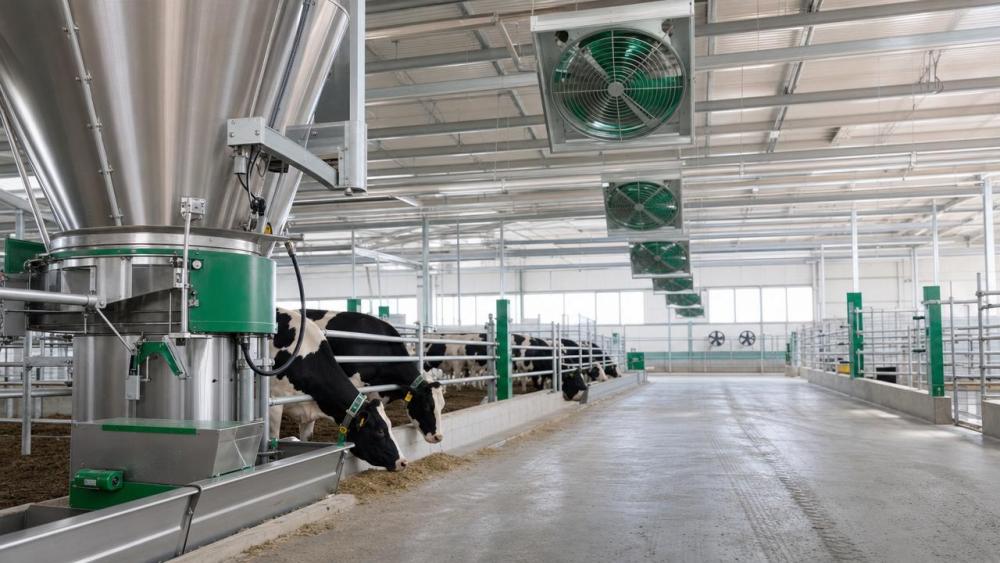
In modern livestock management, data value depends on its connection to decisions. A temperature reading is useful only when it triggers ventilation control, disease alerts, or welfare intervention.
Technical evaluators should separate operational signals from decorative dashboards. The best systems turn barn-level data into actions for feeding, breeding, health, labor, machinery maintenance, and compliance.
For agricultural machinery stakeholders, this distinction is critical. Sensors, feeders, weighing equipment, milking systems, dosing units, and climate controllers all generate data, but not all data improves outcomes.
A practical hierarchy for livestock management evaluation
- Decision-critical data: metrics that directly affect mortality, feed cost, milk yield, growth rate, reproduction, welfare, or regulatory exposure.
- Machine-critical data: information that identifies downtime risk, calibration drift, energy waste, dosing errors, or equipment overload.
- Contextual data: records that explain variation, including weather, housing density, feed batch changes, labor events, and transport conditions.
- Archive-only data: information that may be stored for traceability but rarely requires real-time attention or expensive analytics.
GALM’s Strategic Intelligence Center approaches livestock management from the full value chain. It links farm machinery precision with food safety, sustainable agriculture, and commercial risk analysis.
Core data categories that change farm decisions
A useful livestock management system should not force evaluators to inspect hundreds of isolated indicators. It should organize data around biological performance, equipment performance, and management accountability.
The following table gives technical teams a practical filter for judging whether a data category deserves investment, integration effort, or real-time monitoring priority.
The table shows why livestock management data must be evaluated by actionability. A metric that cannot influence feeding, health, machinery, or compliance should not dominate procurement decisions.
How technical evaluators should compare data systems
The strongest livestock management platforms are not always the ones with the most sensors. They are the ones that integrate cleanly with machinery and deliver reliable decision logic.
When comparing systems, evaluators should test data accuracy, latency, interoperability, maintenance burden, reporting depth, and field usability under real farm conditions.
Comparison dimensions that reduce procurement risk
This comparison framework helps distinguish between a basic livestock management record tool and a machinery-integrated decision platform suitable for multi-site operations.
For technical evaluators, this comparison prevents budget waste. A system that cannot communicate with equipment may create labor pressure rather than improving livestock management.
What parameters matter in machinery-linked livestock management?
Agricultural machinery adds a technical layer to livestock management. Evaluators must confirm whether hardware data is accurate, stable, and suitable for continuous operation in dusty, humid environments.
Parameter review should go beyond sensor labels. It should include calibration method, sampling frequency, power requirements, network stability, data ownership, and maintenance accessibility.
Technical parameter checklist
- Accuracy tolerance should match the decision. Feed weighing needs tighter control than general activity monitoring because ration error directly affects cost.
- Sampling frequency should reflect biological speed. Heat stress and equipment alarms need faster updates than monthly breeding performance reports.
- Environmental protection should suit barns, where moisture, corrosive gases, washdown routines, and dust can degrade sensors and connectors.
- Interoperability should be verified before purchase, especially when farms operate mixed brands of feeders, milk meters, ventilation units, and scales.
- Serviceability should include replaceable components, accessible calibration procedures, clear fault codes, and available technical documentation.
A livestock management system should also support structured export. Technical teams often need CSV, API access, or integration with farm ERP, traceability, and reporting tools.
Scenario-based priorities: dairy, swine, poultry, and beef operations
Livestock management priorities vary by species and production model. A dairy barn values milking consistency, while a broiler facility focuses on climate, feed conversion, and mortality trends.
Technical evaluation should start from the business problem. The right machinery data for one farm may be secondary for another operation with different margins and compliance pressure.
Application scenarios and data priorities
The next table maps common livestock management scenarios to data priorities, machinery sources, and the operational decisions those signals can support.
This scenario view avoids overbuying. It also helps suppliers explain why specific sensors, controllers, and analytics modules are relevant to a buyer’s livestock management objective.
Compliance and traceability data: what should be captured?
Compliance is no longer separate from livestock management. Treatment records, feed origin, antimicrobial use, welfare checks, equipment sanitation, and transport logs influence market access.
Technical evaluators should check whether the system can support audit-ready records without creating duplicate manual work for farm staff or service teams.
Common compliance-related data requirements
- Animal identification records should be linked to treatments, movements, production stage, and withdrawal periods when applicable.
- Feed and additive records should connect batch information with delivery time, storage conditions, ration formula, and mixing equipment logs.
- Environmental records should support welfare reviews, including temperature, humidity, ammonia, ventilation events, and alarm response history.
- Maintenance records should show calibration, repairs, cleaning cycles, and component replacement for critical agricultural machinery.
Relevant frameworks may include local animal welfare rules, food safety systems, ISO 22000-related supply chain practices, and traceability requirements from processors or retailers.
GALM follows global subsidy, trade barrier, and green standard developments. This helps evaluators understand how livestock management data may affect future market entry and certification pressure.
Cost, integration, and alternatives: where does investment really pay back?
Budget pressure is common in machinery procurement. The question is not whether digital livestock management costs money, but which data layers reduce measurable losses or unlock better control.
Evaluators should calculate total cost across hardware, installation, network infrastructure, training, software fees, maintenance, spare parts, and integration with existing equipment.
Investment levels and likely trade-offs
The cost structure of livestock management systems depends heavily on automation depth. The following table supports early-stage procurement discussions.
The highest-value projects usually begin with one measurable target: feed loss reduction, lower mortality, better equipment uptime, improved audit readiness, or faster disease response.
Implementation checklist for technical evaluators
Even a well-specified livestock management system can fail if implementation is rushed. Barn conditions, user habits, network coverage, and machine interfaces must be validated early.
A staged rollout lowers risk. It allows evaluators to prove data quality before expanding to more barns, animal groups, or machinery categories.
Recommended implementation sequence
- Define the decision problem, such as heat stress control, ration deviation, disease alerts, milking downtime, or compliance reporting.
- Map existing machinery and identify which feeders, scales, ventilation systems, meters, and controllers can provide reliable data.
- Run a pilot in one representative barn or production group, including peak workload and adverse environmental conditions.
- Verify data accuracy against manual checks, service logs, veterinary observations, and production outcomes before scaling.
- Document user roles, maintenance procedures, alarm escalation rules, data retention policies, and export formats.
This process turns livestock management from a software purchase into an operational capability. It also gives procurement teams evidence for budget approval and supplier negotiation.
Common misconceptions about livestock management data
Many projects underperform because teams chase more dashboards instead of better decisions. Technical evaluators should challenge assumptions before approving sensors, licenses, or integration work.
Misconception 1: more sensors always mean better control
More sensors can create noise if calibration, placement, and alert logic are weak. In livestock management, one reliable feed intake signal may outperform ten poorly maintained readings.
Misconception 2: software can fix poor machinery maintenance
Digital alerts cannot compensate for blocked water lines, worn mixer blades, uncalibrated scales, or unstable power supply. Equipment condition remains fundamental to data quality.
Misconception 3: compliance records are only administrative
Good compliance records support market access, food safety confidence, and internal risk control. They also provide context when productivity or welfare metrics shift unexpectedly.
FAQ: practical questions technical buyers ask
How do we choose the first livestock management data module?
Start with the costliest or riskiest decision. If feed cost dominates margins, prioritize feed intake, ration accuracy, and mixer records. If mortality risk is high, prioritize health and environment.
What should be checked before integrating older machinery?
Confirm controller compatibility, available communication ports, data format, electrical protection, calibration status, and whether the supplier can support integration without voiding service conditions.
Is real-time livestock management always necessary?
Not always. Heat stress, water interruption, disease alerts, and machinery faults need fast response. Breeding reports, cost reviews, and compliance exports may work on daily or weekly cycles.
What data quality problems appear most often?
Common issues include inconsistent animal identification, sensor drift, missing timestamps, duplicated manual entries, weak network coverage, and unclear responsibility for alarm response.
Why consult GALM before selecting a livestock management solution?
GALM helps decision makers connect livestock management data with machinery performance, sustainability goals, market entry risk, and evolving food system expectations.
Through its Strategic Intelligence Center, GALM combines industrial economics, food engineering, consumer behavior insight, and agri-food technology analysis for practical procurement judgment.
Technical evaluators can consult GALM for parameter confirmation, application scenario assessment, product selection logic, delivery cycle comparison, certification considerations, and supplier strategy review.
If your team is evaluating livestock management platforms, automated feeders, climate controllers, weighing systems, or traceability tools, GALM can help clarify the data that matters before capital is committed.
Contact GALM to discuss machinery-linked data requirements, custom evaluation frameworks, commercial insight support, sample documentation review, and quotation communication for sustainable agriculture projects.
Related News
- What to verify before selecting a feeding systems manufacturerOct 02, 2026Feeding systems manufacturer selection guide: verify engineering, automation, hygiene, compliance, service support, and lifecycle value before investing.
- What determines the price of an automated feeding system?Sep 12, 2026Automated feeding system price depends on capacity, feed type, automation, layout, controls, and installation. Discover the key cost drivers to compare quotes confidently.
- How 1000 Chicken House Size in Meters Shapes Cage and Aisle DesignAug 21, 20261000 chicken house size in meters directly affects cage rows, aisle width, ventilation, and maintenance. Learn how smart layout planning improves efficiency, access, and long-term layer house performance.
- How to Compare Automatic Feeding Systems by Throughput, Feed Accuracy, and Labor CostAug 07, 2026Automatic feeding systems compared: learn how to evaluate throughput, feed accuracy, and labor cost to choose a more efficient, reliable solution for your operation.