




Search
Related News
- 00
0000-00
When do food supply chain disruptions justify higher safety stock? - 00
0000-00
How to identify purchase drivers through consumer behavior analysis - 00
0000-00
What limits consumer adoption in the nutrigenomics market? - 00
0000-00
Which sources provide reliable sustainable food systems market data? - 00
0000-00
How to prevent hydraulic overheating in construction machinery
How heavy machinery choices affect soil compaction




Selecting the right heavy machinery is not just a productivity decision—it directly influences soil structure, crop resilience, and long-term field profitability. For procurement teams in agriculture, understanding how machine weight, tire pressure, axle load, and operating timing affect soil compaction can help reduce hidden costs while supporting sustainable farming goals. This article explores the key machinery factors that shape compaction risk and offers practical insights for smarter equipment purchasing decisions.
In modern farming, machinery selection is often evaluated through hectares per hour, fuel consumption, operator comfort, and total ownership cost. Yet soil compaction can silently reduce rooting depth, water infiltration, nutrient uptake, and trafficability for several seasons. A procurement decision that saves 5% on purchase price may create larger losses if field structure is damaged repeatedly.
For buyers of tractors, harvesters, sprayers, carts, and tillage equipment, the question is no longer simply “Can this machine do the job?” It is also “Can this machine do the job without degrading the productive asset beneath it?” GALM views this as a core decision point in sustainable agriculture, where equipment intelligence connects directly with agronomic resilience.
Why soil compaction should be part of heavy machinery procurement
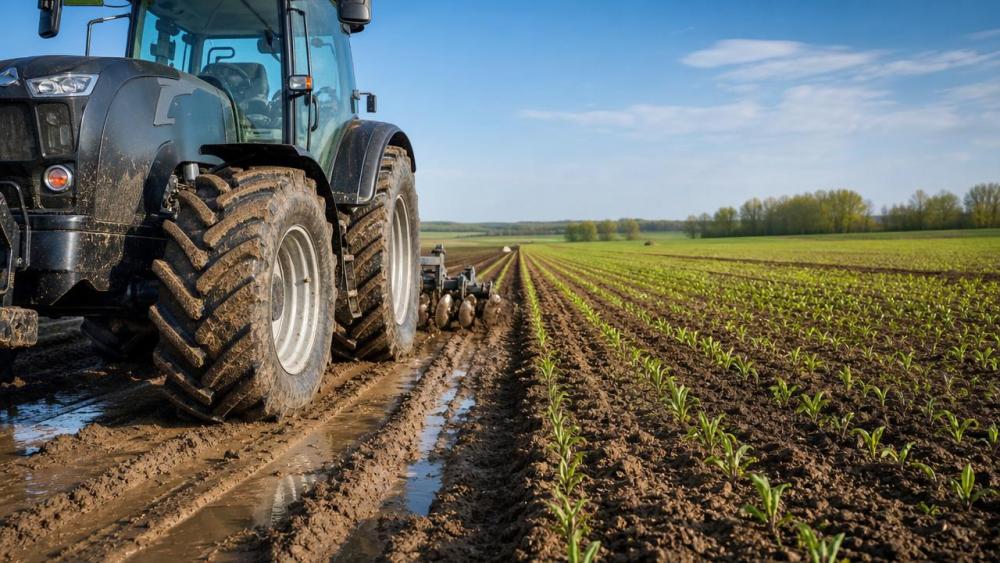
Soil compaction occurs when pressure from heavy machinery compresses pore spaces between soil particles. This reduces air exchange and water movement, while increasing mechanical resistance against roots. In practical terms, compacted layers can form at shallow depths of 5–15 cm or deeper zones of 25–50 cm, depending on load, moisture, and traffic frequency.
Procurement teams are increasingly asked to balance output capacity with environmental performance. Large machines can improve timeliness during narrow planting or harvest windows of 7–20 days, but the same capacity can increase compaction risk when axle loads, tire pressures, and field conditions are not matched carefully.
The hidden cost behind a fast field operation
A high-capacity harvester or grain cart may reduce labor hours and improve logistics. However, if it enters wet soil with excessive axle load, the machine can create deep compaction that is difficult to reverse with routine tillage. Subsoil compaction may persist for 3–10 years under common field conditions.
For buyers, this means soil impact should be treated as a lifecycle cost factor. The purchase evaluation should include expected load distribution, tire or track options, traffic management compatibility, and the availability of telematics for field operation control.
Key compaction mechanisms buyers should understand
- Surface pressure is mainly affected by tire inflation pressure, contact area, and machine setup.
- Deep compaction is strongly linked to axle load, especially when single axle loads exceed typical field-friendly thresholds.
- Repeated passes can intensify compaction, with the first 1–3 passes often causing the largest structural change.
- Soil moisture increases risk because wet soil has lower bearing strength and deforms more easily under load.
These mechanisms help procurement teams ask better questions. Instead of comparing only engine horsepower or tank capacity, buyers can request ground pressure estimates, recommended inflation ranges, unloaded and loaded axle weights, and operating guidance for wet seasons.
Machine weight, axle load, and ground pressure
Heavy machinery affects soil in two main ways: how much total load it carries and how that load is transferred to the ground. A 12-ton tractor with well-matched tires may be less damaging in the topsoil than a lighter machine running narrow tires at high pressure. Conversely, very high axle loads can still transmit stress into deeper layers.
Procurement specifications should separate total machine mass, maximum gross vehicle weight, axle distribution, ballast configuration, tire size, track option, and implement load transfer. A tractor that performs well in transport may need a different setup for seedbed preparation, spraying, or heavy draft work.
Practical parameter ranges for procurement comparison
The following table gives practical comparison points. Ranges vary by crop system, soil type, and machine class, but they offer a useful screening framework before a detailed supplier consultation or field demonstration.
The table shows why a single headline specification is not enough. The best heavy machinery choice is not always the largest or lightest option; it is the configuration that delivers required field capacity while keeping load transfer within manageable limits.
Tires, tracks, and controlled traffic systems
Tire technology has advanced significantly. Increased flexion tires, very high flexion tires, dual wheels, and central tire inflation systems allow operators to reduce pressure in the field and raise it for road transport. This can be valuable when a machine travels 10–30 km between farms.
Tracked heavy machinery can reduce peak surface pressure and improve flotation, especially for harvesters and high-capacity tractors. However, tracks do not eliminate compaction. Total machine weight, turning behavior, belt width, and undercarriage design still influence soil stress.
When controlled traffic becomes a procurement advantage
Controlled traffic farming confines wheel passes to permanent lanes, often covering only 15–30% of the field surface. To support this approach, buyers should evaluate machine working widths, track gauge, GPS accuracy, implement alignment, and compatibility across a fleet of 3–6 machine categories.
A sprayer, planter, tractor, harvester, and grain cart should not be purchased in isolation if controlled traffic is a strategic goal. Procurement teams need a fleet-level view, supported by operational data and supplier transparency.
Soil condition and operating timing: the overlooked buying variable
Even well-designed heavy machinery can compact soil if operated at the wrong time. Soil moisture is one of the strongest risk multipliers. When the soil is near field capacity, it may look trafficable at the surface but remain vulnerable below the top 10 cm.
Procurement decisions therefore need to consider regional weather patterns, crop calendars, and operational windows. A machine that completes harvesting in 6 days instead of 10 may reduce exposure to late-season rain, but only if its loaded axle weight and tire system are appropriate.
Three operating scenarios that change compaction risk
- Dry, firm soil: lower risk, but repeated traffic can still form surface pans.
- Moist soil after rainfall: moderate to high risk, especially under grain carts or loaded harvesters.
- Wet soil near saturation: high risk; non-essential field passes should be delayed where possible.
For buyers, these scenarios translate into equipment requirements. Machines should support rapid adjustment, operator guidance, and field data capture. Central tire inflation, load monitoring, and telematics can reduce poor decisions during a narrow 24–72 hour work window.
Why machine capacity is not only about size
Higher capacity may reduce the number of field days, but it can also increase machine mass and transport loads. The procurement challenge is to find the point where timeliness benefits exceed compaction risks. This requires comparing several configurations, not only one flagship model.
For example, two medium-capacity units may spread workload and reduce peak axle load, but they also increase operators, maintenance points, and capital complexity. One large unit may be efficient, but it needs stronger compaction controls and suitable logistics support.
Questions to ask suppliers before placing an order
- What is the machine’s fully loaded axle weight in typical field operation?
- What tire pressure range is recommended for field and road use?
- Can the machine integrate with GPS guidance at 2–3 cm repeatable accuracy?
- Does the supplier provide setup guidance for at least 3 soil moisture conditions?
- Are telematics records exportable for fleet and sustainability reporting?
These questions help procurement teams move beyond catalogue specifications. They also support internal communication with farm managers, agronomists, finance teams, and sustainability officers who may evaluate different success indicators.
A procurement framework for lower-compaction machinery choices
A robust purchase process should combine technical screening, field validation, lifecycle costing, and supplier support assessment. For heavy machinery, the goal is not to avoid weight completely, but to manage pressure, timing, traffic, and data with a disciplined approach.
GALM’s intelligence perspective encourages buyers to treat soil protection as part of strategic equipment planning. Machinery choices influence not only one season’s output, but also the soil platform supporting yield stability over 5–10 years.
Five-step evaluation process
The table below outlines a practical process for procurement teams comparing tractors, harvesters, sprayers, and transport systems. It can be adapted for farms, cooperatives, contractors, distributors, or institutional buyers.
This framework turns soil compaction from an agronomic concern into a measurable procurement criterion. It also creates a clearer basis for comparing bids that may otherwise look similar on horsepower, tank volume, or harvesting capacity.
Common mistakes in heavy machinery selection
One frequent mistake is assuming that lower machine weight always means lower compaction. If tire pressure is high or the contact patch is small, a lighter unit may still cause surface damage. Another mistake is focusing only on tractor specifications while ignoring loaded implements and carts.
Buyers also underestimate operator behavior. A machine with advanced features can still harm soil if operators do not adjust tire pressure, avoid unnecessary passes, or follow controlled traffic lanes. Training should be budgeted as part of the purchase, not treated as an optional add-on.
Maintenance details that protect soil performance
- Check tire pressure before major operations and after temperature shifts of 10°C or more.
- Inspect tracks, lugs, and tire wear at defined intervals, commonly every 100–250 operating hours.
- Calibrate load sensors, guidance systems, and tire inflation controls at least once per season.
- Review telematics after each high-risk operation to identify repeated passes or wet-field entries.
Maintenance is often discussed as a reliability issue, but it also affects soil protection. A poorly maintained inflation system or misaligned track assembly can change ground pressure and fuel efficiency during critical field operations.
Strategic value for buyers, suppliers, and sustainable agriculture
Procurement teams operate at the intersection of cost, performance, compliance, and future readiness. Heavy machinery that supports lower-compaction operation can help protect yield potential, reduce remedial tillage, improve water infiltration, and strengthen sustainability narratives for downstream buyers.
For suppliers, soil-conscious equipment positioning is also becoming a commercial advantage. Buyers increasingly ask for evidence-based recommendations, not only product brochures. Clear data on axle load, tire options, telematics, and service training can shorten evaluation cycles by 2–4 weeks in complex tenders.
How GALM supports informed machinery decisions
As an international intelligence portal focused on agri-food and life quality, GALM helps decision makers connect machinery trends with sustainability, food security, and market competitiveness. Its Strategic Intelligence Center tracks sector news, subsidy movements, technology adoption, and commercial insights relevant to agricultural equipment procurement.
For procurement teams, this means machinery evaluation can be supported by broader intelligence. A purchase decision may involve regional soil constraints, carbon-related reporting expectations, digital fleet integration, and supplier growth strategies across multiple markets.
Final purchasing guidance
The most resilient approach is to evaluate heavy machinery through 4 connected lenses: field productivity, soil pressure, operational timing, and data-enabled control. A machine that performs strongly in all 4 areas is more likely to deliver reliable returns across different seasons.
Before committing to a purchase, request loaded configuration data, compare tire or track alternatives, confirm operator training, and assess compatibility with controlled traffic or precision agriculture systems. These steps reduce avoidable compaction risks without sacrificing the productivity buyers require.
Smart heavy machinery choices protect more than a balance sheet. They protect the soil structure that supports crop resilience, efficient water use, and long-term field profitability. For organizations seeking market intelligence, procurement guidance, or sustainable agriculture insights, GALM offers a practical bridge between machinery decisions and future-ready agri-food systems.
To explore equipment evaluation frameworks, supplier strategy, or sector-specific intelligence for your procurement plan, contact GALM today to get a customized solution and learn more about sustainable agricultural machinery insights.
Related News
- How agri-tech forecasting data can improve planting decisionsSep 23, 2026Agri-Tech Forecasting data helps growers optimize planting windows, crop choices, inputs, and risk. Discover actionable insights for smarter, more resilient farm decisions.
- Can Agricultural Machinery Be Retrofitted for Precision Farming?Sep 26, 2026Can agricultural machinery be retrofitted for precision farming? Explore compatible upgrades, costs, GPS guidance, rate control, and practical steps to boost efficiency.
- Is Plant Propagation Technology Ready for Commercial-Scale Production?Sep 05, 2026Is plant propagation technology mature enough for commercial scale? Explore proven automation, AI, tissue culture, and the key factors driving nursery ROI.
- What Precision Farming Technology Delivers the Best ROI for Mid-Size Farms?Aug 08, 2026Precision Farming technology ROI for mid-size farms starts with the right fit. Discover which tools—auto-steer, section control, or variable rate—deliver faster payback.