




Search
Related News
- 00
0000-00
How nutritional security assessment identifies gaps in local diets - 00
0000-00
How to assess a food packaging technology manufacturer’s line integration capability - 00
0000-00
Which industrial equipment cost factors matter most before approval? - 00
0000-00
What determines the price of an automated feeding system? - 00
0000-00
How to qualify a specialty chemicals manufacturer for food-contact formulations
Tags
How to Evaluate Battery Cage Costs Through Material and Durability




How to Evaluate Battery Cage Costs Through Material and Durability
In intensive egg production, equipment decisions are rarely just about the initial quotation. For procurement teams, technical evaluators, and financial approvers, the real question is how a cage system will perform over time under constant load, repeated cleaning, manure exposure, and daily bird movement. When pricing varies widely across suppliers, the difference often reflects more than manufacturing location or order volume. It may also reflect metallurgy, wire thickness, corrosion resistance, welding quality, and the structural design choices that affect useful life.
That is why cost evaluation has become a broader industrial sourcing exercise rather than a simple price comparison. A lower upfront number may appear attractive during budget review, but if the system deforms early, requires frequent repairs, or creates management inefficiencies, the long-term cost can rise quickly. In many poultry operations, the cage framework is expected to remain stable for years, making durability one of the most practical indicators of value.
For organizations considering A-type systems, a structured review of battery cage options should connect commercial discussions with material specifications, operating conditions, and maintenance assumptions. That approach helps buyers move beyond surface pricing and toward a more reliable total cost of ownership assessment.
Why This Topic Matters in Today’s Poultry Investment Decisions
Egg producers continue to face pressure to balance productivity, labor efficiency, and capital discipline. In that environment, housing equipment sits at the center of operational planning. A cage system influences flock organization, feed access, inspection routines, waste management compatibility, and the ease of routine sanitation. If the equipment underperforms, the effects may extend beyond maintenance spending and into labor burden, bird management challenges, and avoidable downtime.
This makes cost evaluation relevant not only for farm owners but also for internal cross-functional teams. Purchasing departments often focus on supplier terms, logistics, and contract clarity. Technical reviewers may look at steel quality, coating process, and load-bearing strength. Finance teams usually ask how long the asset is expected to last and whether replacement cycles align with depreciation assumptions. A useful purchasing framework needs to connect all of these viewpoints.
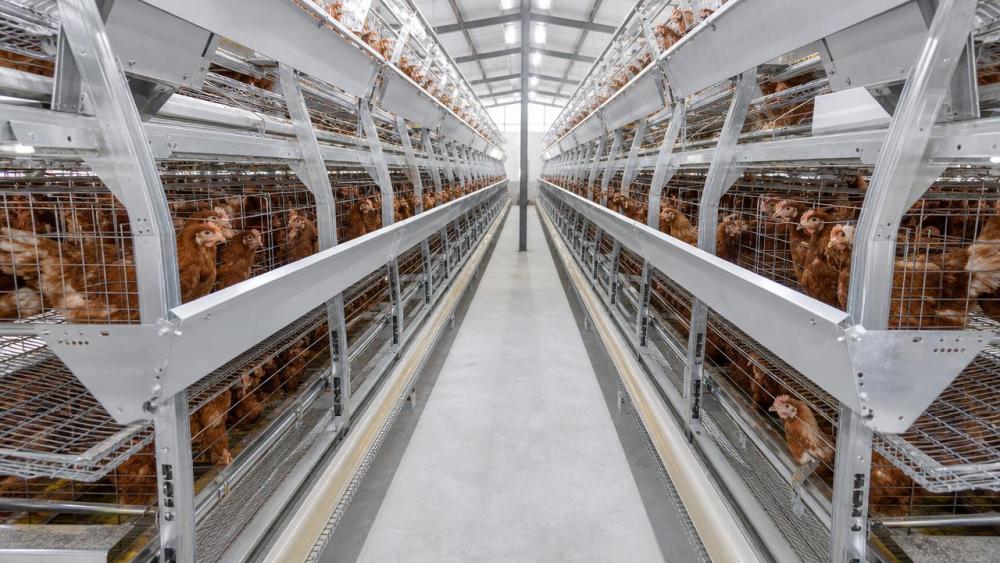
The challenge is that not all quotations describe material quality in the same way. Two systems may appear similar in photos or basic dimensions, yet differ significantly in corrosion behavior, weld consistency, or frame rigidity. Without disciplined evaluation, buyers may compare unlike products and underestimate future operating risk.
Material Specifications Often Explain Price Gaps
One of the clearest drivers of price variation is the steel itself. Buyers often benefit from asking not only what type of steel is used, but also how consistently it is processed across the full structure. The cage body, door sections, support legs, bracing elements, and connecting hardware may not all use the same grade or finish. A quotation that looks competitive may rely on lighter material in less visible structural points.
Corrosion resistance is especially important in poultry housing because moisture, manure gases, and cleaning practices can accelerate degradation. Galvanization method, coating adherence, and surface uniformity all influence how long the structure can maintain its integrity. In many sourcing reviews, the issue is not whether anti-corrosion treatment exists, but whether it is suitable for the farm’s climate, ventilation conditions, and cleaning frequency.
Wire diameter and steel thickness also deserve close attention. Thicker material may improve rigidity, but only if the cage design, weld quality, and support spacing are also appropriate. Buyers should avoid assuming that a heavier specification automatically produces better value. Overdesign can increase cost without a proportional operational benefit, while underdesign may reduce service life. The better question is whether the specification matches the flock scale and expected use cycle.
Key Material Review Points
- Whether the quotation clearly identifies wire and frame material specifications
- Whether coating treatment is described consistently across all major components
- Whether weld points appear uniform and structurally dependable
- Whether replacement parts and matching accessories use equivalent material quality
Durability Is a Structural Issue, Not Just a Surface Issue
Durability should be evaluated as a combination of material quality and structural engineering. Even well-coated steel may fail to deliver expected service life if the cage geometry concentrates stress in high-load areas or if support members are insufficient for the installation height and row length. This is particularly relevant in larger installations, where repetitive loads and movement across connected sections can reveal weaknesses over time.
Procurement teams can benefit from reviewing how the cage system handles practical operating realities. Doors should open and close reliably after extended use. Feed trough interfaces should remain stable. Connection points should resist loosening during routine operation and maintenance. Support elements should help the system remain level, especially where flooring conditions are imperfect. These details may seem secondary during quotation review, yet they often shape maintenance demands after commissioning.
A durable system is not simply one that looks robust when new. It is one that keeps its shape, tolerances, and function under everyday farm conditions. That distinction matters when comparing offers that differ modestly in price but potentially more significantly in lifecycle performance.
How to Compare Suppliers Without Overlooking Hidden Risk
The global supplier landscape offers buyers a wide range of manufacturing bases, quality control approaches, and commercial models. This can create opportunity, but it also makes disciplined comparison more important. Procurement decisions should not rely only on brochure claims or a summary quotation sheet. It is often more useful to compare the completeness and transparency of technical information.
A practical supplier review usually includes production consistency, packaging standards, installation guidance, spare-part support, and responsiveness during technical clarification. In many projects, misunderstanding begins when technical assumptions are left undocumented. For example, if the supplier does not clearly specify coating method, steel dimensions, or tolerance standards, post-delivery disputes may become difficult to resolve.
Lead time and transport conditions also affect cost in ways that are easy to underestimate. If products are damaged in transit because packaging is weak, or if installation sequencing is delayed by missing parts, the original price advantage may shrink. For this reason, experienced buyers often examine delivered value rather than ex-factory price alone.
Common Mistakes in Cost Evaluation
One common mistake is focusing too heavily on unit price while treating installation life as a secondary issue. If a lower-cost system requires earlier refurbishment, more inspections, or greater parts replacement, the apparent savings may not hold. Another mistake is assuming all galvanization or steel treatments perform equally. Terminology can sound similar across quotations, but actual process quality may differ.
Some buyers also overlook the interaction between equipment and farm conditions. A design that performs adequately in one region may face faster wear in a more humid or corrosive setting. Likewise, a cage system chosen without considering manure removal layout, cleaning routine, or labor workflow may create hidden inefficiencies. These are not always visible in the purchase stage, which is why cross-department review is useful.
Another risk is accepting incomplete technical descriptions because the commercial offer looks attractive. When documentation is vague, decision-makers may struggle to validate whether the lower price reflects genuine efficiency or reduced specification. In capital equipment sourcing, uncertainty itself is often a cost factor.
A Practical Framework for Procurement and Finance Teams
A balanced evaluation process usually starts by defining the expected operating horizon of the equipment. From there, teams can assess whether the proposed material and structural design are suitable for that time frame. Rather than asking only which option is cheapest, organizations often get better results by asking which option offers the most stable service profile over the investment period.
- Clarify operating environment, flock scale, and maintenance routine before requesting final quotations.
- Require comparable technical descriptions from each supplier, including coating and structural details.
- Review likely wear points and expected replacement needs during the asset life cycle.
- Assess delivery, packaging, installation support, and spare-part continuity alongside base price.
- Align finance and technical teams around total cost of ownership rather than acquisition cost alone.
This framework can help decision-makers justify capital spending with stronger internal logic. It also makes supplier discussions more productive, because the conversation shifts from headline price to long-term operating value.
Conclusion: Cost Should Be Measured Across the Equipment Life Cycle
In poultry equipment sourcing, the cost of an A-type cage system is best understood through the relationship between material quality, corrosion resistance, structural stability, and expected service life. Price remains important, but price without technical context can be misleading. For buyers responsible for operational continuity and capital discipline, the more useful benchmark is whether the equipment is likely to remain reliable under real production conditions.
A well-structured evaluation process does not eliminate all uncertainty, but it can reduce the chances of purchasing an asset that appears economical at first and becomes expensive later. For procurement, technical, and financial stakeholders alike, the strongest decisions usually come from viewing durability as a core cost factor rather than an optional product feature.
Related News
- Choosing Agricultural Machinery for Tillage by Soil Type and Fuel CostJul 11, 2026Agricultural machinery for tillage should match soil type and fuel cost. Discover practical tips to cut operating expenses, protect soil, and choose equipment with better long-term value.
- How to Compare Machinery in Middle East by Uptime, Support, and Total CostJul 09, 2026Machinery in Middle East comparison starts with uptime, support, and total cost—not price alone. Learn how to choose reliable suppliers, reduce downtime risk, and improve long-term value.
- Construction Machinery Parts: Cost Drivers and Sourcing RisksJul 06, 2026Construction machinery parts cost more than unit price alone. Explore key cost drivers, supplier risks, logistics challenges, and smart sourcing tactics to reduce downtime and improve long-term value.
- Agri-Tech Solutions Equipment: Key Costs Before You InvestJul 02, 2026Agri-Tech Solutions equipment costs go beyond the purchase price. Discover hidden expenses, ROI risks, and smart investment checks before you commit.