




Search
Related News
- 00
0000-00
Life sciences trends analysis: Which innovations are gaining traction? - 00
0000-00
Cold Chain Delivery Efficiency: Cutting Delays Without Temperature Excursions - 00
0000-00
Stainless Steel Beverage Tanks: A Buyer Checklist for Production Lines - 00
0000-00
How nutritional economic trends are changing supplement pricing - 00
0000-00
How to assess a commercial project solutions supplier before awarding a contract
Why livestock farming margins need cleaner records




Why livestock farming margins need cleaner records
In livestock farming, profitability is increasingly determined not only by herd performance but by the quality of the records behind every decision.
For business evaluators, fragmented feed, health, labor, and machinery data can hide margin leaks and distort investment conclusions.
Cleaner records turn daily farm activity into reliable intelligence for assessing costs, operational efficiency, compliance exposure, and growth potential.
What business evaluators really need from livestock farming records
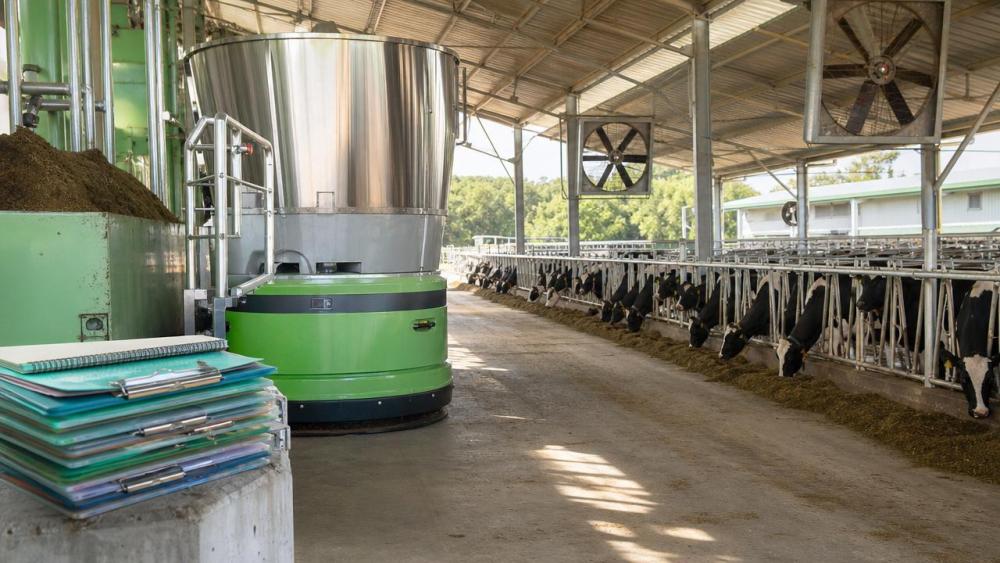
When evaluators review a livestock operation, they are not only asking whether the farm is currently profitable.
They are asking whether the reported margin is repeatable, explainable, and resilient under changing feed, labor, disease, and market conditions.
Clean records help answer that question because they connect production outcomes with the costs and decisions that produced them.
A farm may show acceptable net income while losing money in specific barns, animal groups, feed programs, or machinery routines.
Without structured records, those weak points remain blended into averages, making the business appear more stable than it is.
For lenders, investors, insurers, and strategic buyers, that uncertainty becomes a valuation discount or a reason to delay action.
Good records do not make a weak farm strong, but they make performance visible enough to price risk accurately.
Why margin leaks are often hidden in ordinary farm data
Livestock farming margins are affected by many small variables that accumulate quietly across the production cycle.
Feed conversion, mortality, fertility, veterinary treatments, energy use, labor scheduling, and equipment downtime each influence the final margin.
If these figures are recorded in different spreadsheets, notebooks, invoices, or software systems, evaluators cannot easily connect cause and effect.
For example, higher feed cost may not be the real issue if poor grouping, inconsistent weighing, or disease pressure lowered conversion efficiency.
Similarly, rising labor cost may reflect inefficient workflows, but it may also reflect necessary interventions that reduced mortality.
Clean records allow evaluators to separate controllable inefficiency from justified spending and unavoidable market pressure.
That distinction matters because it changes the interpretation of management quality and future improvement potential.
A margin problem caused by poor data discipline is different from one caused by unfavorable regional input economics.
Clean records improve cost structure analysis
Cost structure analysis is central to any business evaluation of livestock farming, yet it is often weakened by vague expense categories.
Feed, veterinary care, bedding, utilities, transport, machinery service, and hired labor should be traceable to relevant production units.
Evaluators need to know whether costs belong to breeding, finishing, milking, brooding, waste management, or general overhead.
When expenses are only recorded at farm level, benchmarking becomes imprecise and management conversations become subjective.
Cleaner records support unit economics, such as cost per kilogram gain, cost per liter produced, or cost per weaned animal.
These indicators help identify whether a farm’s margin depends on operational excellence or temporary favorable market prices.
They also help evaluators test sensitivity to feed inflation, labor shortages, animal health events, or interest rate changes.
A business with transparent unit costs can be modeled more confidently, which directly supports financing and investment decisions.
Asset value depends on the records behind the assets
Livestock farms are asset-heavy businesses, but physical assets alone do not determine economic value.
Machinery, housing, feeding systems, milking equipment, ventilation, and manure handling assets must be assessed against utilization and maintenance records.
A tractor, mixer wagon, robotic milker, or climate control system may look functional during inspection but carry hidden operating risk.
Maintenance logs, fuel consumption, repair frequency, service intervals, and downtime records reveal whether equipment supports margin or erodes it.
For business evaluators, this information helps distinguish productive capital from deferred maintenance disguised as short-term savings.
A farm that undermaintains machinery may show attractive short-term cash flow while accumulating future capital expenditure.
Clean machinery records also reveal whether automation is delivering labor savings or simply adding technical complexity.
In agricultural machinery decisions, the economic question is not only what equipment exists, but whether it improves measurable performance.
Health and welfare records are now financial records
Animal health data is sometimes treated as a veterinary matter, but it is also a core financial indicator.
Disease incidence, treatment cost, withdrawal periods, mortality, culling reasons, and reproductive performance all affect revenue reliability.
For evaluators, cleaner health records show whether production losses are isolated events or recurring structural weaknesses.
They also support compliance review, particularly where antibiotic use, traceability, welfare standards, and food safety protocols are scrutinized.
A farm with poor health documentation may face market access limitations, audit failures, insurance complications, or reputational risk.
These risks can reduce enterprise value even when current production volumes appear satisfactory.
Clean records make it easier to evaluate biosecurity discipline, treatment effectiveness, herd resilience, and management response speed.
In sustainable agriculture markets, documented welfare and health practices increasingly influence buyer preference and contract stability.
Records reveal whether technology is creating value
Many livestock operations invest in sensors, feeding automation, herd management platforms, and precision nutrition tools.
However, technology only improves margins when its data is accurate, integrated, and used in management decisions.
Business evaluators should not assume that digital tools automatically equal better operations or stronger scalability.
They should examine whether technology reduces labor hours, improves feed conversion, lowers mortality, or increases consistency across production groups.
Clean records create the evidence trail needed to measure return on technology investment.
For example, automated feeding data should align with animal growth, feed inventory, ration changes, and procurement costs.
If systems generate data but managers still rely on intuition, the investment may be underused.
If records are integrated and reviewed regularly, technology becomes a management asset rather than a capital expense.
How cleaner records strengthen due diligence
During due diligence, evaluators need to move quickly from reported performance to verified performance.
Clean records reduce the time spent reconciling invoices, production logs, veterinary notes, payroll files, and inventory movements.
They also reduce the number of assumptions required in valuation models, which improves confidence in projected earnings.
For acquisition targets, better records can support a higher valuation by lowering perceived operational uncertainty.
For lenders, they strengthen credit assessment by clarifying cash conversion, working capital needs, and exposure to input volatility.
For insurers, they provide evidence of risk management, maintenance discipline, and animal health control.
For strategic partners, they show whether the farm can meet supply commitments consistently and transparently.
In each case, record quality becomes part of the commercial story, not merely an administrative detail.
What counts as a clean record system
A clean record system is not necessarily the most expensive software platform.
It is a disciplined structure where key operational, financial, health, and machinery data is complete, timely, consistent, and traceable.
Each record should have a clear owner, date, unit of measurement, production group, and link to relevant cost or output.
Feed deliveries should connect with inventory, ration use, animal groups, and production outcomes.
Health treatments should connect with animal identification, withdrawal periods, veterinary protocols, and later performance.
Labor records should distinguish routine work, emergency response, maintenance, animal care, and administrative tasks.
Machinery records should connect usage hours, fuel, repairs, downtime, and operator notes.
The goal is not perfect complexity, but reliable visibility into the drivers of margin.
Key indicators evaluators should request
Business evaluators should request records that explain both current margin and future risk.
Essential indicators include feed cost per production unit, feed conversion trends, mortality, morbidity, fertility, culling reasons, and treatment frequency.
They should also review labor cost per unit, overtime patterns, employee turnover, machinery downtime, repair cost, and energy consumption.
Inventory accuracy is important because feed, medicine, spare parts, and livestock counts can materially affect working capital assessment.
Revenue records should show grade, quality premiums, rejected deliveries, contract terms, payment timing, and exposure to spot markets.
Compliance records should cover traceability, waste handling, welfare audits, medicine usage, and environmental reporting where applicable.
Trend data is more useful than one-time snapshots because livestock farming performance changes across seasons and production cycles.
Evaluators should prioritize records that can be reconciled against invoices, bank movements, physical counts, and third-party documentation.
How poor records affect valuation and financing
Poor records usually increase the risk premium applied to a livestock business.
If evaluators cannot verify costs, they may normalize earnings downward or require additional working capital buffers.
If production data is inconsistent, they may discount growth projections or question management reliability.
If maintenance history is missing, they may assume higher future capital expenditure and lower asset quality.
If health records are incomplete, they may increase risk allowances for disease, compliance failure, or supply disruption.
These adjustments can materially affect deal terms, loan covenants, insurance pricing, or strategic partnership conditions.
In contrast, clean records can support stronger negotiations because they reduce uncertainty and demonstrate operational control.
For owners, record improvement can therefore be a value creation project before fundraising, refinancing, or sale.
Practical steps for building cleaner records
The first step is to define which decisions the records must support.
A farm seeking financing may prioritize cost structure, cash flow timing, collateral condition, and risk controls.
A farm preparing for sale may prioritize profitability by unit, maintenance history, compliance evidence, and customer contract performance.
The second step is to standardize categories, naming conventions, time periods, and production groups across departments.
This prevents one team’s feed records from becoming incompatible with another team’s animal performance data.
The third step is to assign accountability so data entry does not become an optional afterthought.
Farm managers should review exception reports, missing fields, abnormal usage, and unexplained cost movements on a regular schedule.
Finally, records should be reconciled with physical reality through inventory checks, animal counts, equipment inspections, and financial statements.
Where agricultural machinery data fits in
In modern livestock farming, machinery data is a crucial bridge between operations and financial performance.
Feeding systems, manure equipment, ventilation, cooling, bedding machines, and transport assets directly influence productivity and cost stability.
Cleaner machinery records help evaluators understand whether equipment capacity matches herd size and production targets.
They also reveal whether breakdowns are causing delayed feeding, poor barn conditions, higher labor demand, or animal stress.
For machinery suppliers and farm technology providers, record discipline helps prove the economic impact of equipment upgrades.
For farm owners, it helps compare repair-versus-replace decisions using evidence rather than habit.
For investors, it clarifies whether capital expenditure plans are defensive, efficiency-driven, or necessary for expansion.
This is why machinery intelligence should be integrated into the wider livestock performance record, not kept separately.
When record improvement delivers the highest return
Cleaner records are most valuable when farms face strategic decisions with financial consequences.
These include expansion, refinancing, automation investment, supplier renegotiation, insurance renewal, certification, acquisition, or succession planning.
They are also valuable when margins are tightening and management needs to locate the real source of pressure.
A farm cannot control global feed prices, but it can control ration accuracy, waste, procurement timing, and conversion monitoring.
It cannot eliminate disease risk, but it can document prevention, response, treatment outcomes, and financial impact.
It cannot avoid all machinery failures, but it can track patterns and plan replacement before breakdowns damage production.
The return on cleaner records comes from better decisions, lower uncertainty, stronger negotiations, and fewer hidden losses.
For evaluators, the highest-value records are those that change conclusions, not those that merely fill archives.
Conclusion: cleaner records turn margin into evidence
Livestock farming margins are no longer judged only by output volume, herd size, or visible farm assets.
They are judged by the quality of the evidence explaining how performance was achieved and whether it can continue.
For business evaluators, clean records reduce uncertainty across cost structure, asset condition, health management, compliance, and technology returns.
For farm owners and operators, they expose margin leaks early and support stronger decisions on machinery, labor, feed, and growth.
The practical message is clear: cleaner records are not administrative overhead, but a foundation for credible valuation and sustainable profitability.
Related News
- Moisture, Cleaning and Repair Risks in Wooden Broiler Chicken CagesOct 07, 2026Broiler wooden chicken cage in Nigeria maintenance guide: prevent moisture damage, improve cleaning, and make safer repairs for lasting poultry housing.
- What Is a Poultry Company? Core Operations From Flock Care to EquipmentOct 01, 2026que es una empresa avicola? Explore how poultry companies manage flock care, housing, equipment, biosecurity, and production for reliable operations.
- How Floor Space Allocation Affects Welfare and Productivity in a 1,000-Bird Layer HouseSep 17, 2026dimension poulailler pour 1000 poules pondeuses — discover how precise floor space allocation boosts welfare, productivity & ROI in layer houses.
- Homemade Laying Hen Cages: Materials, Dimensions, and Safety ChecksSep 07, 2026Como hacer jaulas para gallinas ponedora caseras: explore safe materials, practical dimensions, ventilation, egg hygiene, and essential checks for a reliable setup.