








What Machinery Is Best for Small-Scale Food Processing Plants?
Choosing the right equipment can determine whether a small food processing plant achieves efficient growth or faces costly bottlenecks. Machinery decisions affect quality, hygiene, labor, waste, compliance, and future profitability.
So, what is the best machinery for small scale food processing plants? There is no single universal machine. The best choice is a right-sized, hygienic, reliable equipment combination matched to products and demand.
For most emerging processors, priority should go to equipment that improves food safety and consistency before investing heavily in high-speed automation or oversized production capacity.
This guide explains how owners, operations managers, and food entrepreneurs can select machinery that supports practical growth without creating unnecessary capital, maintenance, or operating pressure.
Start With Product, Process, and Daily Output
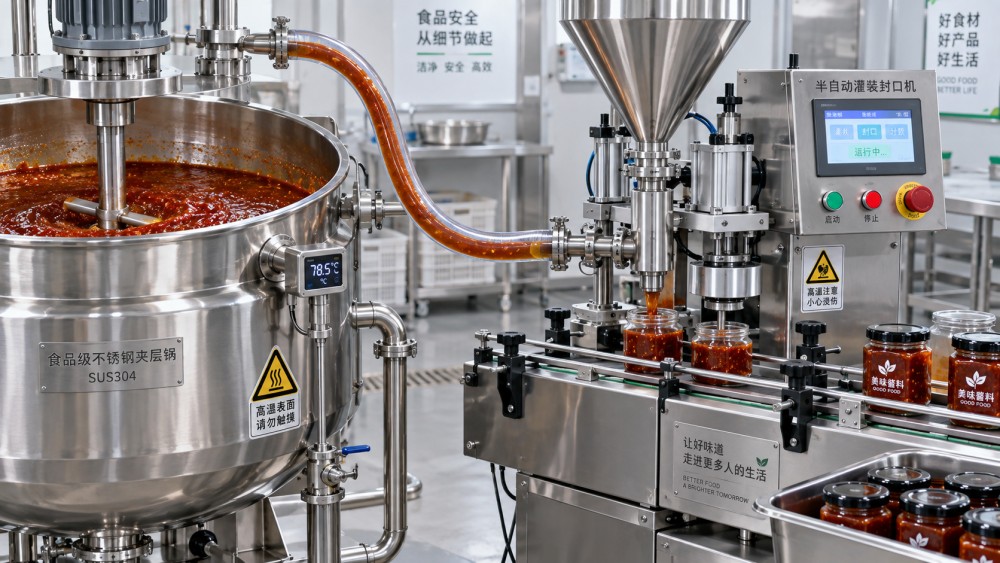
The most useful machinery begins with a clear process map. Identify every step from receiving ingredients through preparation, processing, packaging, storage, and dispatch before requesting supplier quotations.
A small fruit processor needs different equipment from a dairy startup, spice blender, bakery, meat producer, or ready-meal kitchen. Product characteristics should always drive machinery selection.
Consider ingredient size, moisture level, acidity, viscosity, temperature sensitivity, shelf-life target, and packaging format. These factors determine whether equipment must cut, cook, pasteurize, dry, fill, seal, or cool.
Daily output is more important than a supplier's maximum rated capacity. A machine designed for excessive volume can increase energy use, cleaning time, footprint, and working-capital requirements.
Calculate realistic output using expected orders, batch frequency, seasonal peaks, labor availability, and downtime. A modular line serving today's demand with room for expansion is usually the better investment.
Buyers should also distinguish between nominal capacity and usable capacity. Cleaning, changeovers, ingredient preparation, operator breaks, maintenance, and packaging replenishment reduce actual productive hours.
For example, a mixer rated at 300 kilograms per hour may not deliver that output across multiple recipes. Viscous products, short batches, and manual loading can substantially reduce throughput.
The best machinery for small scale food processing plants is therefore equipment that fits the slowest critical step. Eliminating a true bottleneck creates more value than upgrading every operation.
Build the Core Line Around Essential Processing Stages
Most small facilities do not need a complete automated factory from day one. They need a dependable core line that handles critical food safety, product quality, and production consistency requirements.
The first category is receiving and preparation equipment. This commonly includes sorting tables, weighing scales, ingredient bins, wash tanks, produce washers, peelers, cutters, slicers, and grinders.
Manual preparation may appear inexpensive, but it often creates uneven product size, labor strain, excessive trimming losses, and difficult sanitation control. Semi-automatic preparation equipment can resolve these recurring problems.
For vegetable, fruit, and fresh-cut operations, a washer with bubble agitation, spray rinsing, and optional sanitizing capability can improve cleanliness while lowering dependence on intensive hand washing.
Cutting equipment should deliver uniform dimensions because size affects cooking, drying, filling, appearance, and customer perception. Ask suppliers to demonstrate machinery using your actual ingredients whenever possible.
The second category is transformation equipment. Depending on the product, this may include mixers, blenders, cookers, steam kettles, fryers, extruders, mills, homogenizers, presses, or fermentation tanks.
Mixers are among the most versatile investments for sauces, seasonings, bakery fillings, meat products, nutritional powders, and prepared foods. Select mixing action based on product viscosity and ingredient behavior.
Ribbon blenders work well for many dry powders, while paddle mixers can handle fragile or sticky materials. Planetary mixers are common for doughs, creams, pastes, and dense formulations.
Heating equipment deserves special scrutiny because temperature control affects both safety and flavor. Jacketed kettles with agitators are often practical for soups, sauces, jams, purees, and cooked fillings.
Small processors should favor systems with accurate temperature probes, programmable controls, safe discharge valves, and accessible cleaning surfaces. These features reduce batch variation and simplify operator training.
Choose Preservation Machinery Based on Shelf-Life Strategy
Preservation equipment often determines whether a business can sell locally, serve retailers, reduce spoilage, or reach export markets. Shelf-life targets should be defined before selecting processing and packaging machinery.
Refrigerated products may require blast chillers, cold rooms, refrigerated display storage, and temperature monitoring. Fast cooling protects product quality and limits the period when microbial growth is most likely.
For shelf-stable sauces, beverages, jams, and liquid foods, pasteurizers or retorts may be essential. The appropriate system depends on acidity, container type, viscosity, and documented food safety requirements.
Pasteurization can extend product life while preserving relatively fresh characteristics. However, it does not replace good ingredient handling, sanitary design, suitable packaging, or validated process controls.
Retort processing is appropriate for certain low-acid products requiring commercial sterility. It involves higher technical complexity, stronger packaging demands, process validation, and specialized operator competence.
Drying machinery is valuable for processors making herbs, fruits, vegetables, snacks, grains, spices, pet food, and functional ingredients. Drying can reduce shipping costs and make seasonal supply easier to manage.
Tray dryers are often suitable for small batches because they are comparatively simple and flexible. Cabinet, heat-pump, vacuum, and freeze-drying systems may be justified for higher-value products.
Do not select a dryer based only on moisture removal speed. Evaluate final texture, color retention, nutrient protection, energy use, cleaning requirements, and product shrinkage under real operating conditions.
Freezing equipment can also be a strategic option for seasonal crops and prepared foods. Small blast freezers help protect product structure better than slow freezing in standard cold storage.
A preservation method should be commercially justified. Longer shelf life has limited value when packaging costs, utility consumption, validation expenses, or inventory risks exceed achievable market demand.
Packaging Equipment Often Produces the Fastest Business Gains
Packaging is where product quality becomes a sellable proposition. Poor seals, inaccurate fills, weak labeling, and inconsistent presentation can undermine otherwise excellent food processing work.
For many small manufacturers, a reliable filling and sealing system delivers faster returns than additional upstream equipment. It improves throughput, reduces giveaway, and supports a more professional retail presentation.
Liquid and semi-liquid products may use piston fillers, gravity fillers, pump fillers, or volumetric cup systems. The best option depends primarily on viscosity, particulates, fill accuracy, and container design.
Dry products such as flour, spices, snacks, grains, and nutrition powders commonly require auger fillers, multihead weighers, or volumetric fillers. Accuracy matters because overfilling directly reduces margin.
Vacuum sealers are useful for many meat, cheese, seafood, coffee, and dry food applications. Modified-atmosphere packaging can further extend shelf life but requires dependable gas control and compatible films.
Small plants should not overlook date coding, labeling, checkweighing, and metal detection. These systems strengthen traceability, retail readiness, recall response, and customer confidence.
A semi-automatic packaging line is frequently the sensible starting point. It can combine manual product loading with automated filling, sealing, coding, and labeling without requiring a large technical workforce.
When comparing packaging machines, test the full packaging material proposed for use. Film quality, pouch dimensions, container tolerances, and seal surfaces all influence actual line performance.
Packaging decisions should also account for sustainability. Lightweight materials, recyclable formats, lower food waste, and efficient pack sizes can improve environmental performance without compromising product protection.
Prioritize Hygiene, Food Safety, and Cleanability
Food machinery is not simply a production asset. It is part of the plant's food safety system. Equipment that is difficult to clean can create contamination risks and expensive operational disruption.
Stainless steel contact surfaces, preferably food-grade stainless steel, are fundamental for most wet and high-care applications. Materials should resist corrosion, cracking, flavor transfer, and repeated sanitation chemicals.
Inspect weld quality, drainage points, seals, joints, corners, and access panels. Food residues can accumulate in poorly designed areas, making cleaning verification difficult and reducing product safety confidence.
Equipment should be accessible enough for operators to inspect and clean it properly. A cheaper enclosed machine becomes costly when dismantling requires excessive labor or specialist service calls.
Cleaning-in-place systems can be useful for tanks, piping, pumps, and closed liquid systems. However, smaller plants should confirm that water, chemical, drainage, and wastewater capacity support the system.
Food safety documentation matters as much as physical construction. Request manuals, electrical diagrams, material certificates, cleaning instructions, maintenance schedules, and recommended operating parameters from suppliers.
Plants pursuing HACCP, ISO 22000, BRCGS, local licensing, or retailer approval should involve quality personnel early. Machinery layouts and cleaning practices can affect certification success significantly.
Good design also protects workers. Look for guards, emergency stops, lockout provisions, insulated hot surfaces, safe lifting points, clear controls, and training resources in a language operators understand.
Decide How Much Automation Your Plant Actually Needs
Automation can improve consistency and reduce repetitive labor, but it is not automatically the best answer for a small processor. The right level depends on volumes, skills, variability, and budget.
Manual equipment offers flexibility when recipes, formats, or order quantities change frequently. It can be appropriate for premium, seasonal, test-market, or locally distributed products with limited runs.
Semi-automatic machinery is often the strongest middle ground. Operators retain control over loading and changeovers while machines perform repetitive tasks requiring greater accuracy, speed, or hygiene discipline.
Fully automated lines become more attractive when demand is predictable, SKU variation is limited, labor costs are high, and production volume can keep the equipment consistently utilized.
Before automating, measure the current process. Record output per hour, labor hours, reject rates, product giveaway, cleaning time, downtime, and customer complaints for each major stage.
Automation should solve a demonstrated business constraint. Buying complex machinery to appear modern can create dependence on technicians, expensive spare parts, and long interruptions when systems fail.
Digital monitoring can be a practical early investment. Basic sensors for temperature, weight, metal detection, humidity, energy consumption, and batch records improve control without building a fully automated line.
For GALM readers monitoring sustainable agriculture and precision nutrition markets, traceable process data can also support stronger product claims, supplier management, and long-term commercial decision-making.
Assess Total Cost of Ownership Before Comparing Purchase Prices
The lowest purchase price rarely represents the lowest operating cost. Small food businesses should compare machinery using total cost of ownership over several years, not initial quotations alone.
Total cost includes installation, shipping, utilities, foundations, ventilation, water treatment, electrical upgrades, spare parts, training, maintenance, cleaning chemicals, packaging compatibility, and production losses during startup.
Energy efficiency deserves careful attention, especially for heating, cooling, drying, freezing, compressed air, and steam systems. Utility costs can become a major long-term margin issue.
Ask suppliers for typical electricity, fuel, water, air, and wastewater requirements at the expected operating rate. Compare these figures against local utility prices and infrastructure capacity.
Maintenance planning is equally important. Machines with locally available service technicians and standard replacement components generally create less operational risk than highly specialized imported systems.
Request a recommended spare-parts list and ask which components commonly fail. Keeping critical seals, sensors, belts, bearings, heaters, and control parts on site may prevent lengthy shutdowns.
Evaluate return on investment through labor savings, waste reduction, increased saleable output, better product quality, lower recalls, improved shelf life, and new market access rather than labor reduction alone.
A machine can justify its cost when it helps a processor satisfy retailer specifications, meet regulatory requirements, protect a premium product position, or turn inconsistent batches into reliable sales.
Plan a Layout That Supports Growth Without Creating Bottlenecks
Machinery selection and facility layout should be planned together. A high-performing machine can underperform when ingredients, staff, packaging, water, waste, or finished goods cannot move efficiently around it.
Separate raw material handling from finished products wherever possible. This reduces cross-contamination risk and supports clearer hygiene zoning, cleaning schedules, personnel movement, and quality management practices.
Allow enough space for loading, unloading, cleaning, inspection, maintenance access, and safe operator movement. Tight layouts often cause delays, unsafe practices, and poor sanitation outcomes.
Utilities must be matched to the machinery plan. Verify electrical voltage, load capacity, gas supply, steam, water pressure, drainage, refrigeration, compressed air, extraction, and wastewater management before purchase.
Expansion should be practical, not theoretical. Leave connection points or floor space for an additional filler, cold room, dryer tray rack, packaging station, or storage area when demand grows.
Machinery suppliers should provide layout drawings with dimensions, utility connections, service clearance, and weight data. These documents help avoid costly installation modifications after equipment arrives.
A phased investment plan is often appropriate: establish safe preparation and core processing first, strengthen packaging second, then add automation or capacity once sales justify the upgrade.
Questions to Ask Before Signing a Machinery Contract
Strong purchasing decisions depend on specific questions. Generic supplier claims about efficiency or quality are not enough when a small facility must protect limited capital and customer relationships.
Ask whether the machine has processed products similar to yours, at comparable batch sizes and moisture levels. Demonstrations using actual ingredients provide more useful evidence than catalog specifications.
Confirm the guaranteed output, expected yield, fill accuracy, energy requirements, cleaning duration, changeover time, noise level, and operator requirements in writing before finalizing the agreement.
Clarify warranty coverage, remote support, installation supervision, commissioning, training, spare-parts lead times, software access, and local service availability. Downtime is especially damaging for small producers.
Check whether the supplier can provide customer references in your product category. Existing users can reveal practical issues involving cleaning, reliability, documentation, and after-sales responsiveness.
For international purchases, confirm shipping terms, import duties, certification requirements, electrical compatibility, language of manuals, and responsibility for damage or commissioning delays during delivery.
Finally, avoid buying every possible machine at once. Start with equipment that protects quality, removes the main bottleneck, and creates measurable commercial value under realistic operating conditions.
Conclusion: Select a Right-Sized System, Not a Single “Best” Machine
The best machinery for small scale food processing plants is a coordinated system built around the product, process, demand level, food safety obligations, labor model, and growth strategy.
For most small processors, the priority order is clear: hygienic preparation equipment, reliable core processing, appropriate preservation, accurate packaging, traceability controls, and practical maintenance support.
Businesses should invest first where machinery improves safety, consistency, yield, shelf life, or market access. These gains are more durable than purchasing capacity that remains unused.
A disciplined evaluation process helps processors avoid expensive mismatches. Test real products, calculate total ownership costs, verify service support, and design the line around actual daily operations.
With the right equipment strategy, small food plants can reduce waste, build customer trust, comply with changing standards, and scale steadily from local production toward stronger regional opportunities.